Nobody talks about the part of deer hunting that happens after the shot. The magazines show the arrow flying, the buck at full draw, the grip-and-grin photo. What they skip is the two hours in between, when you're crawling through a greenbrier thicket on your hands and knees, headlamp in your teeth, whispering "there's blood… no wait, that's a red leaf" for the fourteenth time.
Blood trailing is part detective work, part obstacle course, and part test of how much creek water your boots can hold. And once you find your deer? Congratulations, now you get to haul it out. Uphill. In the dark. Probably through the exact same thicket.
Here in Missouri, archery season is rolling, the early youth firearms weekend is right around the corner, and the November firearms opener is coming fast. That means a lot of hunters are about to spend quality time following a deer through places no sane person would walk on purpose. So let's talk about doing it smarter, drier, and with fewer briars stuck in your shins.
Blood Trailing Basics: Patience First, Boots Second
The single best tracking tool you own is your watch. Jumping down and charging after a deer too soon is how a short recovery turns into an all-nighter. Most experienced hunters give a good hit at least 30 minutes, and a questionable hit a lot longer. Use that wait to replay the shot, note where the deer was standing, and watch where it ran. Sit on your hands if you have to.
When it's time to go, a few habits make the trail easier to read:
- Start at the hit site. Look for hair, blood, and the arrow if you're bowhunting. They tell you a lot about what comes next.
- Mark your last blood. A strip of flagging tape or a square of toilet paper on a branch keeps you from losing the line when it goes cold.
- Move slow and look ahead. Check leaves, the undersides of brush, and grass stems at knee height, not just the ground.
- Bring a buddy and a good light. Two sets of eyes beat one, and a bright headlamp plus a backup flashlight saves a lot of squinting.
- Know when to back out. If the sign says "give it more time," listen. Bumping a wounded deer usually makes the trail longer, not shorter.
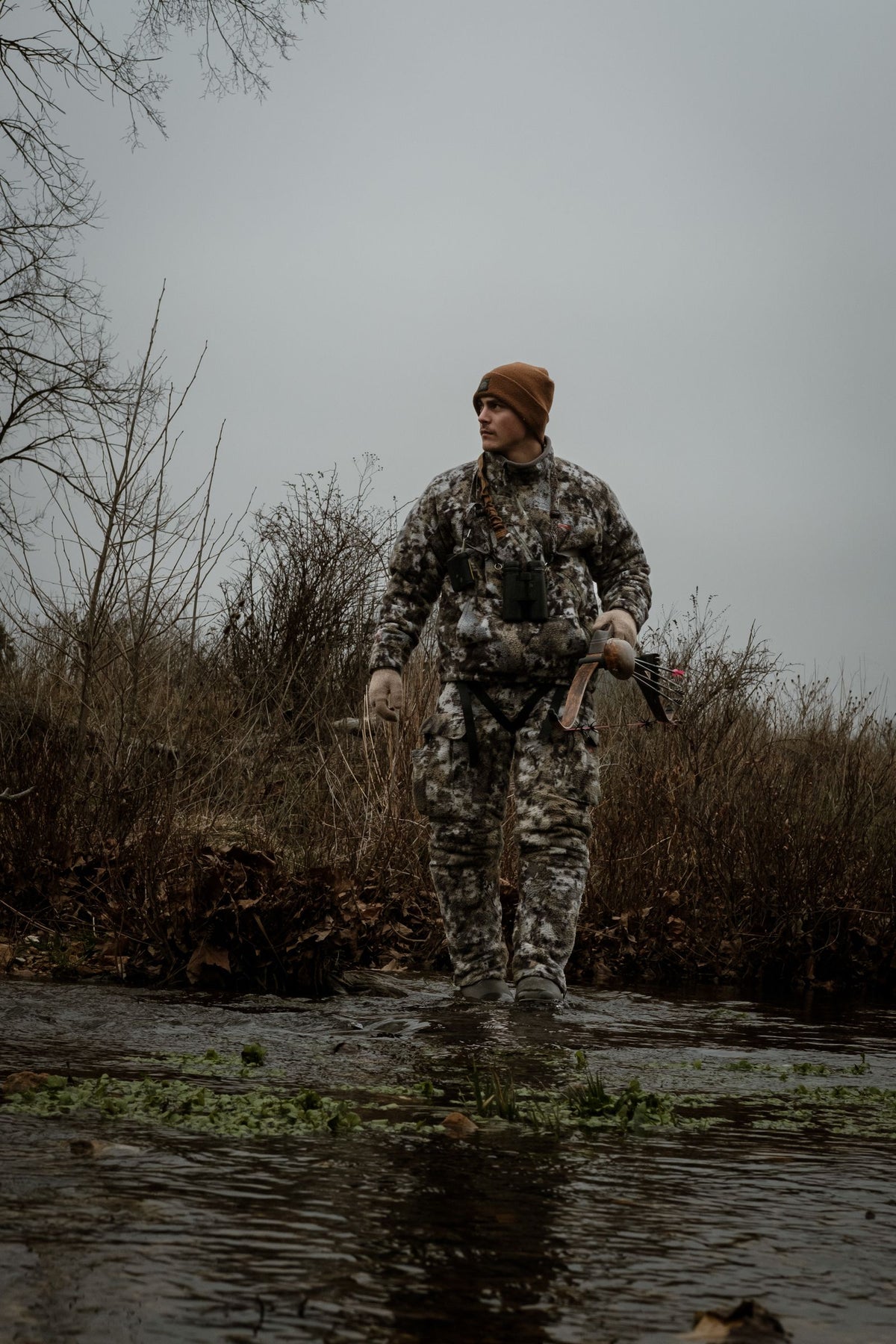
And here's the thing nobody warns you about: wounded deer don't head for the mowed path. They head for the nastiest, wettest, thorniest cover on the property. Creek bottoms. Cattail sloughs. Cedar thickets so tight a rabbit needs a permission slip. Which is where your gear starts to matter.
Leg Gaiters for Deer Hunting: Your Shins Didn't Sign Up for This
Blood trailing at night means you're not picking your steps. You're watching the ground for sign, not for the multiflora rose that's about to grab your pant leg. That's exactly where a good pair of leg gaiters earns its spot in the pack.
Our Pike Trail Leg Gaiters are built for durability and abrasion resistance in rugged terrain and wet environments, so they take the beating from briars, burrs, and wet grass that would otherwise go straight to your pants (and your legs). They're waterproof, and the adjustable fit works over or under your hunting pants, with or without layers, whether you're in a light October setup or bundled up for a cold sit later on.
The real bonus shows up when the trail drops into the creek bottom. Dew-soaked grass and soggy ground don't get to wick up your pant legs and into your boots, which means you're still comfortable when the trail goes another 300 yards. The Olive Drab color blends right into the fall woods, and Black is a classic that goes with everything, including mud.
One more perk: gaiters are a nice physical barrier against fall ticks, which are still very much out there in October. Pair them with the habits in our tick prevention guide and do a quick check when you get home. Nobody wants a souvenir.
Waterproof Socks for Hunting: Because the Deer Crossed the Creek (Of Course It Did)
There is a universal law of tracking: if there's a creek anywhere nearby, the deer crossed it. Sometimes twice. You can spend ten minutes hunting for a dry crossing, or you can just walk through and keep the trail fresh.
That's where Pike Trail Waterproof Breathable Socks come in. They use a three-layer construction with a waterproof, breathable membrane in the middle, and they're waterproof from the toe to the bottom of the cuff. The inner Coolmax layer wicks sweat away, so the sock that keeps creek water out doesn't turn your feet into a swamp from the inside either.
They also hold warmth well, which matters when a long recovery turns into a 10 p.m. drag on a cold night. They're designed to help prevent blisters and chafing, too. Heads up: they're thicker than your average sock, so try them with your hunting boots before opening morning. The Pine color looks right at home in a deer camp.
Carbon Fiber Trekking Poles for Hunting: The Pack-Out Upgrade
You found your deer. You took a minute to appreciate it. Now comes the part where your legs, back, and knees file a formal complaint. Whether you're dragging a whole deer or packing out quarters on your back, the trip out is usually the toughest part of the day, especially on steep Ozark ridges and slick, leaf-covered slopes.
A pair of Pike Trail Carbon Fiber Trekking Poles gives you two extra points of contact when you're carrying weight downhill. They're shock-absorbing to help reduce impact on your knees and joints, and at just 7.4 oz per pole they won't add much to your load on the walk in. They collapse to 24 inches to strap onto your pack, then extend up to 54 inches with secure flip locks when you need them.
The included mud baskets keep the tips from sinking in soggy creek bottoms, and the natural cork grips are a lot friendlier on cold hands than bare metal. Bonus: a pole makes a pretty handy probe for parting brush while you look for that next drop of blood. If your tips are worn from last season, we carry replacement tips and mud baskets too.
Your Blood Trailing & Pack-Out Checklist
Keep a small tracking kit in your pack all season so you're not scrambling when it counts:
- Bright headlamp plus a backup light and spare batteries
- Flagging tape or toilet paper for marking sign
- Leg gaiters for the briars, burrs, and wet cover
- Waterproof socks (on your feet, not in the truck)
- Trekking poles for the steep, heavy trip out
- Knife, gloves, drag rope or game bags, and plenty of water
- Your phone, charged, so you can call for help with the drag (and brag a little)
For the rest of the gear that makes the walk to your stand quieter and drier, check out our Bow Season Gear Guide.
Missouri Deer Season Dates to Know
Per the Missouri Department of Conservation, the 2026–27 archery season runs Sept. 15–Nov. 13 and Nov. 25–Jan. 15. The early youth firearms portion is Oct. 24–25, and the November firearms portion runs Nov. 14–24. If you're in the woods during any firearms portion, hunter orange is part of the uniform. And once your deer is down, remember to notch your permit and Telecheck it following MDC's rules. Always double-check the current regulations and get permission before tracking onto a neighbor's ground.
Here's to short blood trails, easy drags, and dry feet all season long. Take your time, trust the sign, and enjoy every minute out there. Even the briar patch. Okay, maybe not the briar patch.
— The Pike Trail Crew
Wander More. Worry Less.