Somewhere in Missouri right now, a pickup is backing up to a cabin, a camper, or a tent that's seen better decades. Coolers are coming out. Somebody is already arguing about whose turn it is to cook. And at least one guy is standing in the yard asking, loudly, who moved his good knife.
Welcome to deer camp. The November portion of Missouri's firearms deer season runs November 14–24, 2026, and for a lot of families that eleven-day stretch is the closest thing to a holiday that doesn't involve a casserole. (Well, Thanksgiving lands right in the middle of it, so there may still be casserole.)
Deer camp is equal parts hunting trip, family reunion and endurance event. You'll walk in before daylight through grass so wet it might as well be a creek, sit cold for hours, walk back out for lunch, then do it all again. In between, you'll spend a surprising amount of time sitting around a fire telling the same stories as last year, with slightly bigger deer.
The difference between a camp you can't wait to get back to and one you're quietly counting down comes down to a few simple things: dry feet, warm legs, and somewhere decent to sit. Here's how we'd set up for it.
The Dawn Walk-In: Leg Gaiters for Deer Hunting in Wet Cover
Every deer camp morning starts the same way. Alarm at an unreasonable hour, coffee, boots, and a walk to the stand through fields that have been collecting dew and frost all night. By the time you climb in, your pant legs are soaked to the knee, and that cold water wicks straight down into your socks. Now you get to sit still in it until 10 a.m.
That's the job Pike Trail Leg Gaiters are built for. They give you 16 inches of full-length coverage over your boots and lower legs, so wet grass, mud and briars hit ripstop nylon instead of your pants. Arrive at the stand, and your legs are dry. It's a small thing that makes a five-hour sit feel like a much shorter one.
A few details that matter at deer camp specifically:
- They fit over big boots. The 7-Point Fixation System adjusts the top and bottom separately, so they lock onto insulated boots and calves up to 19 inches, over or under your pants and layers.
- Glove-friendly. The extra-wide hook and loop closure goes on and off quickly, even with gloves on. Very helpful at 5:15 a.m. by headlamp.
- They're tough on brush. Double-stitched ripstop nylon handles fencerows, cedar thickets and the multiflora rose patch your uncle swears is a shortcut.
For a woods-friendly look, Olive Drab is in stock and blends right in, and Black goes with everything. Black also hides mud, which is relevant, because there will be mud.
Waterproof Socks for Hunting: Keep Your Feet Dry, Warm and in Good Humor
Cold feet end more sits than bad wind ever has. And cold feet usually start as damp feet, either from water getting in or sweat building up on the walk.
Our Waterproof Breathable Socks handle both. They use a three-layer build: a durable nylon outer layer, a waterproof and breathable membrane in the middle, and a Coolmax inner layer that pulls moisture away from your skin. They're waterproof from the toe to the bottom of the cuff, so a missed step into a soggy low spot doesn't have to wreck your morning, and they're designed to hold warmth in the cold.
One honest tip: these are thicker than regular socks, so try them with the boots you'll actually hunt in before opening morning. If your boots are snug, swap your usual thick wool sock for these and see how it feels. The Pine color is in stock in several sizes, and it's a nice touch with green gear.
Pair the socks with the gaiters and you've covered your lower half from both directions. The gaiters keep the outside world off, and the socks deal with whatever gets past or builds up inside. That's how you make it to lunch still smiling.
Trekking Poles at Deer Camp (Yes, Really)
Trekking poles at deer camp get a few raised eyebrows, right up until somebody has to cross a muddy ditch in the dark carrying a rifle and a pack. Then everybody wants to borrow them.
Pike Trail Carbon Fiber Trekking Poles weigh 7.4 ounces each and adjust from 24 to 54 inches with flip locks, so they pack down small in the truck and set up quickly. They come with rubber tips, mud baskets and snow baskets. The mud baskets are the deer camp MVP: they keep the poles from sinking into soft bottoms and creek banks. Cork grips are comfortable on cold hands, and the shock absorption takes some strain off your knees on the hills.
Poles also earn their keep after the shot. If you get a deer down on steep ground, a steady pole makes the drag out a lot less ugly. We covered that walk-in (and the drag back out) in more detail in our firearms deer season opener gear guide. Fun fact: one of the colors is called Camp Fire, which is about as on-theme as gear gets this week.
Deer Camp Chairs: The Most Important Seat in Camp
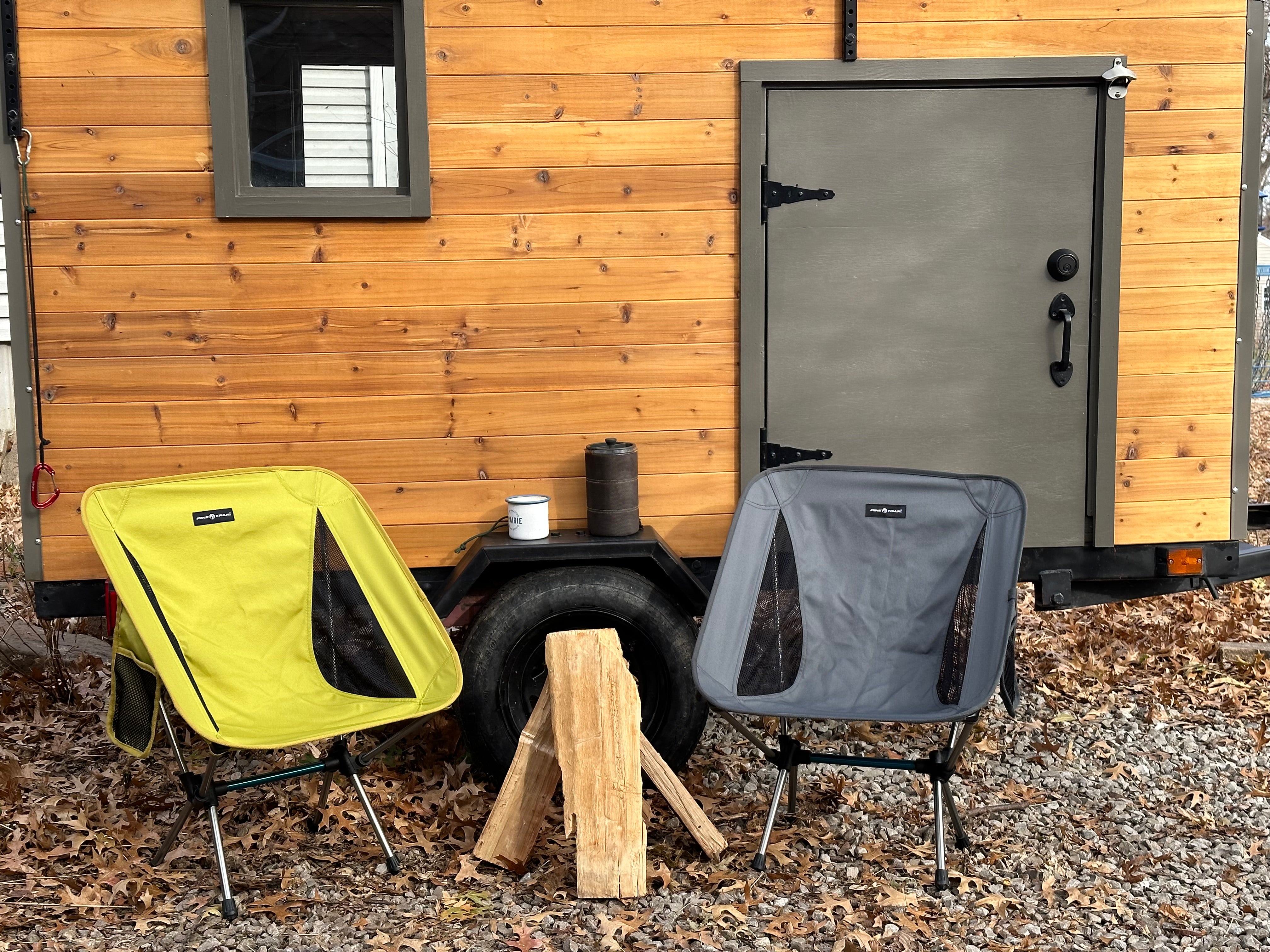
Every deer camp has a chair hierarchy. There's the good chair, which belongs to whoever's been coming the longest. There's the folding chair with one sketchy leg. And there's the overturned bucket, which is where the new guy sits.
The Pike Trail Ultralight Chair weighs just 2.2 pounds and holds up to 330 pounds. It folds down to 13 x 5 x 6 inches, so you can toss one in the truck for every person in camp and still have room for the cooler. It snaps together in seconds, has two built-in cup and phone holders for your coffee or your rangefinder, and comes with a carry bag.
Where it shines at deer camp:
- Around the fire. This is where the real deer camp happens. Stories, strategy, and somebody explaining that the big one "just didn't present a shot."
- Next to the tailgate at lunch, when you're refueling between the morning and evening sits.
- At the skinning pole, for supervisors. Every camp has supervisors.
Camp ground gets soft after a few days of trucks and boots. Anti-Sink Chair Feet snap onto the legs and spread your weight across mud and loose dirt so you aren't slowly tipping backward mid-story. Add the Compact Aluminum Camp Table and you've got a spot for the coffee pot, a deck of cards, and the hunting regs everyone pretends they've already read.
A Simple Deer Camp Checklist
Every camp has its own traditions, but here's a short list worth checking before you leave the driveway:
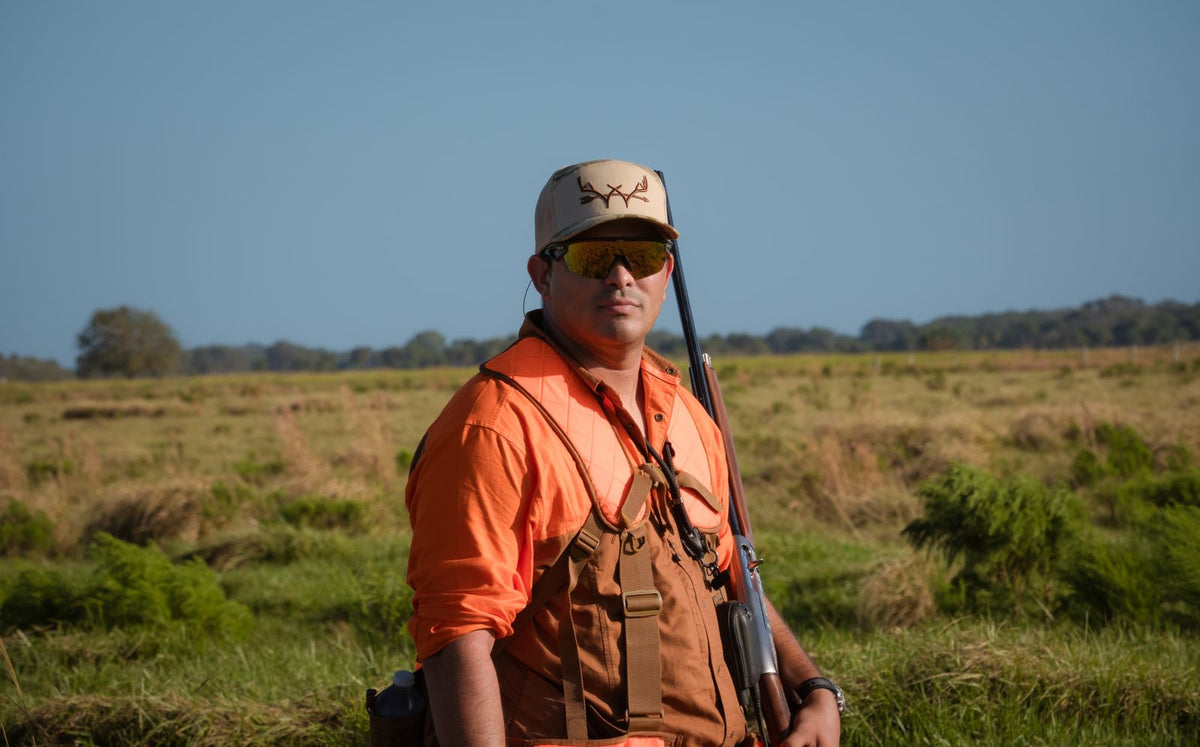
- Hunter orange for everyone. Missouri requires it during the firearms portions, so check the current Wildlife Code for exactly what counts.
- Permits purchased and handy on your phone, plus a plan for Telechecking your deer.
- Leg gaiters for the wet, brushy walk to the stand.
- Waterproof socks, plus a spare dry pair for the afternoon sit.
- Trekking poles with mud baskets on.
- A headlamp with fresh batteries (and backup batteries, because you will forget).
- Camp chairs for everybody, so nobody's stuck on the bucket.
- Game bags, rope and a sharp knife, and somebody who knows where that knife actually is.
Remember that legal shooting hours run from a half hour before sunrise to a half hour after sunset. Bowhunters, your archery season picks back up November 25, so camp doesn't have to close just because the rifles go back in the safe.
Why Deer Camp Is Worth It
Ask anybody who's been going for 30 years, and they'll tell you the deer are almost beside the point. It's the cold-morning coffee, the quiet in the stand when the woods wake up, the kid who tags their first deer, and the stories that get a little better every November.
Taking care of the basics means you spend more of that time enjoying it. Dry legs, warm feet, steady footing and a good seat by the fire won't put a buck in front of you. They will keep you out there long enough to give it a chance.
So load the truck, find the knife (check the glovebox), and save a chair by the fire for us. Good luck this season, be safe, and we hope your camp has the best stories this year.
— The Pike Trail Crew
Wander More. Worry Less.