Every public land deer hunter knows the feeling. You pull into the conservation area parking lot an hour before daylight, feeling pretty smug about your early start, and your headlights land on four trucks, a side-by-side trailer and a guy in a lawn chair eating a breakfast burrito. Welcome to public land in November. Everybody had the same great idea you did.
Here's the good news: most of those folks aren't going very far. Hunter-tracking studies have found that a big share of hunters stay surprisingly close to roads and parking areas, often within about a third of a mile. The deer figure out where that pressure ends, and they spend their days just past that line.
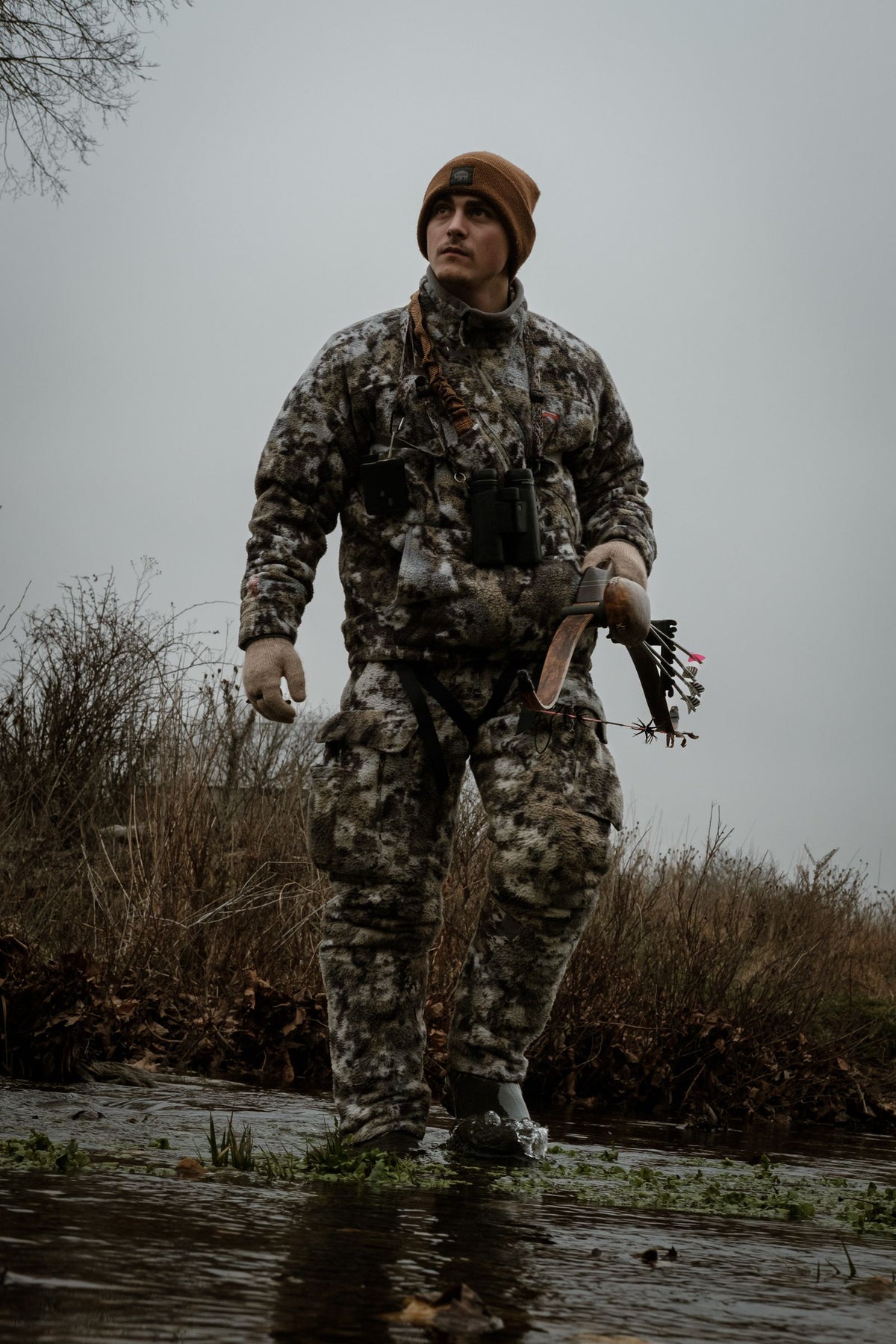
Which brings us to the oldest public land strategy in the book: walk farther than everybody else. Cross the creek nobody wants to cross. Climb the ridge that makes people sigh. Push through the thicket that looks like it was designed by a committee of briars. That's where the unpressured deer are, and that's where your season can get a lot more interesting.
The catch? The deeper you go, the more your comfort matters. A wet sock a quarter mile from the truck is an annoyance. A wet sock a mile and a half back, three hours before dark, is a life choice you will think about all afternoon. So let's talk about how to get deep, stay comfortable, and actually enjoy the trip.
Why Pressured Deer Go Deep (and Why You Should Follow)
Public land deer are smart in a very specific way. They learn where people park, where the easy trails go, and what time the orange hats start showing up. Once the pressure ramps up, they tend to slide into the nastiest cover around: creek bottoms, cedar thickets, steep hollows, cutover timber and overgrown fields that nobody wants to wade through. Missouri's November firearms portion runs November 14–24, 2026, and archery picks back up November 25, so the pressure doesn't let off for long.
A few ways hunters find those spots before they ever leave the couch:
- Study the map for barriers. Creeks, steep drops and thick cover that make other hunters turn around are your friends.
- Check the area's rules first. Each conservation area can have its own regulations on stands, blinds, vehicles and hunting methods, so read up on the MDC website before you go.
- Plan your exit before your entry. Every extra half mile in is an extra half mile out, possibly with a deer.
The Long Walk In: Leg Gaiters for Public Land Deer Hunting
Getting past the crowd usually means leaving the trail. And off-trail public land in November is wet grass, frosty fescue, beggar's lice, blackberry canes and multiflora rose that grabs your pant legs like it's trying to keep you from leaving. Ten minutes of that and your pants are soaked to the knee, with water wicking straight down into your boots.
That's the exact job Pike Trail Leg Gaiters are built for. They give you full-length 16" coverage that keeps water, mud, ticks and briars out of your boots, made from double-stitched ripstop nylon that's tough on thorns but light enough that you forget you're wearing it. On a long walk, that matters.
- They stay put over a long haul. The 7-Point Fixation System uses a micro tension adjuster plus metal snaps at the top and bottom, so the fit holds instead of sagging around your ankles by mile one.
- They fit over real hunting boots. Because the top and bottom adjust separately, they lock onto insulated boots and fit calves up to 19", over or under your pants.
- Gloves stay on. The extra-wide hook and loop closure goes on fast at the tailgate, even in the dark with cold hands.
- They pack away. A carry bag is included, so once you're set up you can stash them in your pack.
Olive Drab is our pick for the timber, with Black as the classic backup. Both are in stock and ready for the walk past the parking lot crowd.
Crossing the Creek Nobody Else Will: Waterproof Socks for Hunting
Some of the best public land spots are guarded by water. A shallow creek, a flooded slough, a low spot that turns into a mud pit after one November rain. Most hunters look at it, mutter something unprintable, and turn around. That's exactly why the deer like the other side.
Pike Trail Waterproof Breathable Socks make those spots a lot less intimidating. They use a three-layer build: a durable nylon outer layer, a waterproof and breathable membrane in the middle, and a Coolmax inner layer that wicks moisture away from your skin. They're waterproof from the toe to the bottom of the cuff and hold warmth well in the cold.
That breathability is a bigger deal on public land than people think. A long, hard walk in means sweaty feet, and sweaty feet get cold fast once you sit still. Socks that pull moisture away from your skin help you go from "walking hard" to "sitting still" without the shivers setting in an hour later.
Two quick tips from the crew: they're thicker than an average sock, so try them in your hunting boots before the hunt. And remember they're waterproof up to the cuff, not above it, so pair them with gaiters and save the waist-deep crossings for the beavers. Pine is the natural hunting color.
Carbon Fiber Trekking Poles for Hunting Steep, Rough Ground
A lot of Missouri public land is ridges, hollows and leaf-covered slopes that turn into slip-and-slides. Doing that in the dark with a pack and a bow or rifle is how ankles get rolled and seasons get cut short.
The Pike Trail Carbon Fiber Trekking Poles help keep you upright. They weigh just 7.4 oz each, adjust from 24" to 54" with secure flip locks, and collapse small enough to strap onto your pack once you're set up. The cork grips stay comfortable in cold hands, and they come with rubber tips, mud baskets and snow baskets for whatever the bottomland throws at you.
Plenty of hunters carry a single pole and keep the other hand free for their weapon. A pole is also handy for probing how deep that creek really is before you commit. Forest Green blends right into the woods, and Camp Fire is easy to spot if you set it down in the leaves.
A Mobile Setup That Doesn't Weigh You Down
When you're hunting a mile back, everything you carry gets heavier with every step. If you're sitting the ground against a big oak or glassing a field edge from the treeline, a real seat beats a cold, wet log every time.
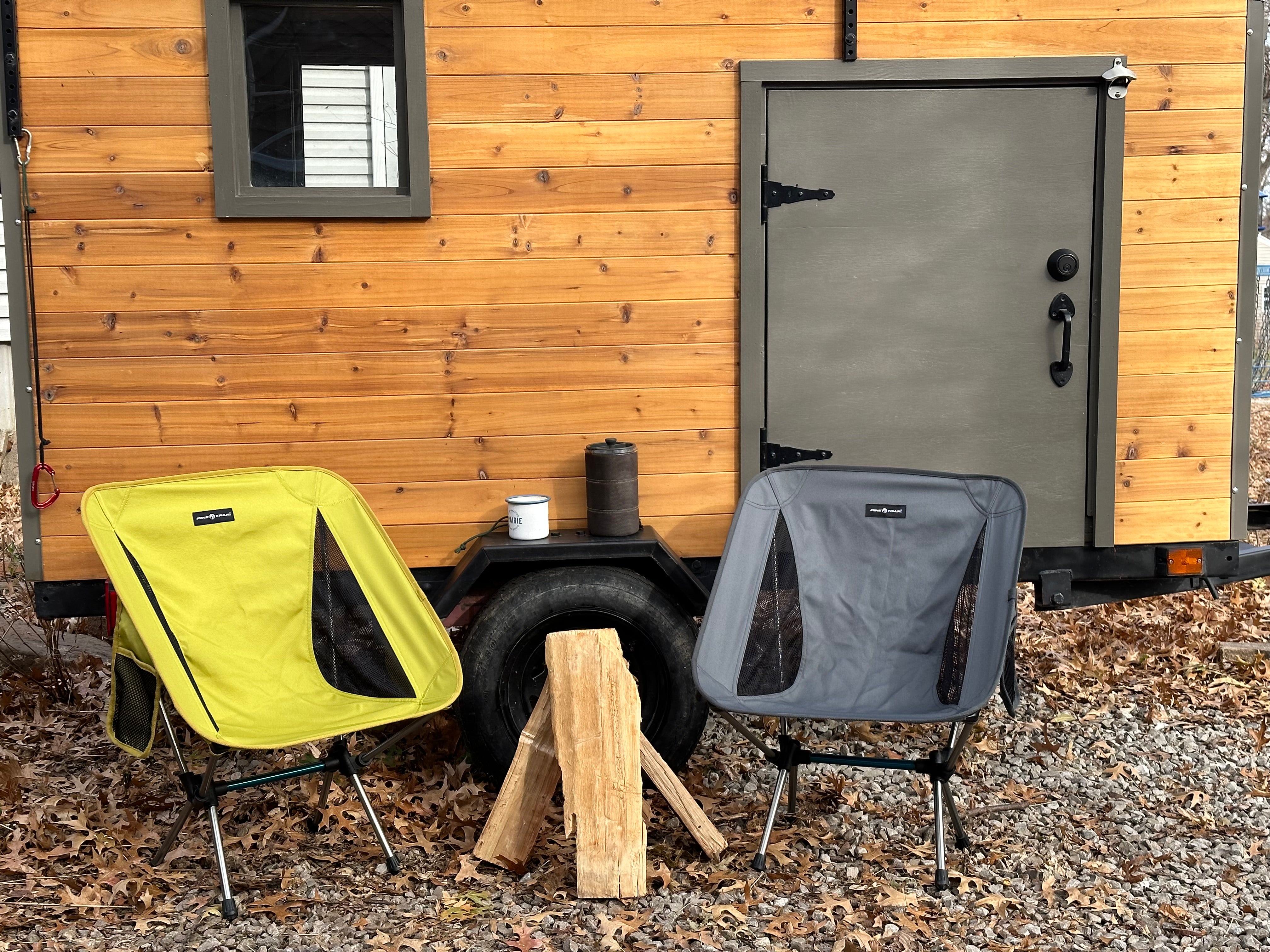
The Pike Trail Ultralight Chair weighs 2.2 pounds, holds up to 330 pounds and folds down to 13" x 5" x 6" in its carry bag, so it rides on a daypack without much fuss. It snaps together in seconds and has two built-in cup holders, which means your coffee doesn't have to balance on a root. Battleship Grey keeps things low-key.
Plan for the Pack-Out Before You Pull the Trigger
Here's the part of deep public land hunting that nobody puts on the brochure: if it goes right, you now own a deer that's a long way from your truck. Make a plan before the shot. Bring a buddy if you can, pack a game bag, a headlamp with backup batteries and plenty of water, and know your route back. Our guide to blood trailing and packing out your deer covers the tracking and hauling side of things in detail.
And during firearms season, wear your hunter orange as required by MDC regulations, all the way in and all the way out. On busy public ground, being seen is part of the gear list.
The Reward for Walking Farther
The best part of hunting deep public land isn't only the deer. It's the quiet. The first time you sit somewhere a mile and a half from the nearest parking lot, hear nothing but squirrels and the creek, and realize the only footprints out there are yours and the deer's, you'll get why people do this. It's ground that belongs to all of us, and the folks willing to walk a little farther get to see the best of it.
So lace up, strap on, and go see what's over that next ridge. We hope your feet stay dry, your route stays clear and your pack-out is long for all the right reasons. Good luck out there this November.
— The Pike Trail Crew
Wander More. Worry Less.