There's a tick crawling through the tall grass right now that doesn't carry Lyme disease — it carries something stranger and, for a lot of people, far more life-altering. One bite can leave you unable to eat a hamburger, a steak, bacon, or even a scoop of ice cream without breaking out in hives, doubling over with stomach cramps, or in the worst cases, going into anaphylaxis.
It's called alpha-gal syndrome, and if you spend any time outdoors — hiking, hunting, fishing, paddling, or just mowing the back forty — it's worth understanding. Especially because the tick that causes it is spreading into places it has never been, biting people who have never heard of it.
Here's what's going on, and how a good pair of gaiters (plus one cheap, powerful hack) can keep you off the casualty list.
What Is Alpha-Gal Syndrome?
Alpha-gal is short for galactose-alpha-1,3-galactose — a sugar molecule found in the tissue of almost all mammals. Beef, pork, lamb, venison, rabbit, even the dairy and gelatin that come from those animals all contain it. Humans don't.
When a lone star tick bites you, its saliva can introduce alpha-gal into your bloodstream. For some people, the immune system reacts by treating that sugar as a threat — and it builds antibodies against it. From that point on, every time you eat red meat or a mammal-derived product, your body can mount an allergic response to it.
In other words: a single tick bite can flip a switch that turns the meat you've eaten your whole life into something your body attacks.
Meet the Lone Star Tick
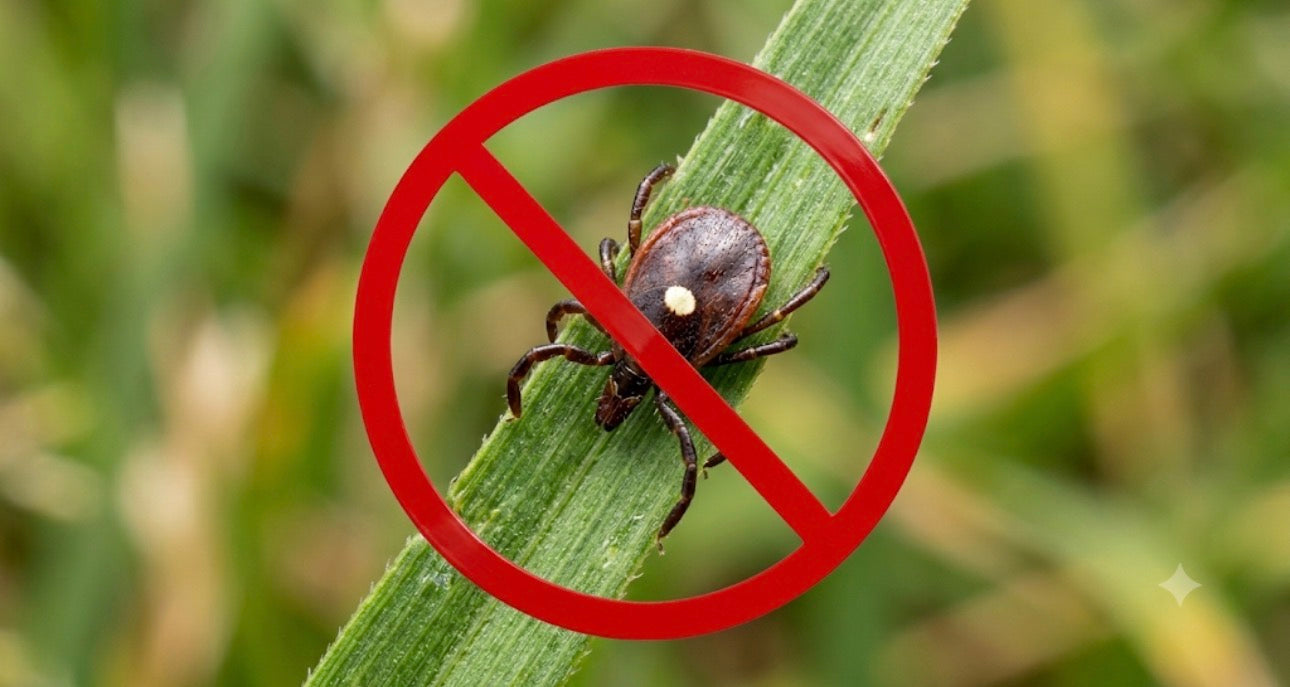
The lone star tick (Amblyomma americanum) gets its name from the single white dot on the back of the adult female. It's an aggressive biter — unlike some ticks that wait passively, lone stars will actively move toward a host. And it's not just the adults you have to worry about. The tiny larvae, sometimes called "seed ticks," are no bigger than a poppy seed and can latch on by the dozens before you ever feel them.
That's the problem. These ticks live low — in leaf litter, brush, and tall grass — and they climb. Your ankles and lower legs are ground zero.
It's Spreading — and Most People Have No Idea
For a long time, alpha-gal was considered a Southern problem. The lone star tick was historically a creature of the Southeast, so that's where the cases were.
That's changing fast. Warming winters, shifting deer populations, and changes in land use are pushing the lone star tick north and west into regions it never occupied before. Public health officials in the Northeast are now calling alpha-gal an emerging concern — Massachusetts began tracking it as a reportable condition this year, and Martha's Vineyard alone logged hundreds of positive tests in a single season. Cases have now been identified in nearly all 50 states, and the syndrome got its own official diagnosis code in 2024.
The CDC estimates as many as 450,000 Americans may be affected — with more than 110,000 suspected cases documented between 2010 and 2022 alone. And because alpha-gal isn't a nationally reportable disease, the real number is almost certainly higher.
Here's the scary part: in these newer territories, a lot of doctors aren't looking for it. People get bitten, develop the allergy, and then suffer through months of mysterious reactions before anyone connects the dots. If you live in the Midwest, the mid-Atlantic, the Northeast, or anywhere the lone star tick is moving in, you and your physician may not even know it's on the table.
Why the "Meat Issue" Is Such a Big Deal
This is the part that catches people off guard. Most food allergies hit fast — eat the peanut, react within minutes. Alpha-gal doesn't play by those rules.
The reaction is delayed. Symptoms typically show up 2 to 6 hours after you eat, often in the middle of the night after a dinner you've long since forgotten about. That delay is exactly why it's so hard to diagnose — almost no one connects last night's burger to the 2 a.m. hives.
And the symptoms aren't trivial. They can include:
- Hives, intense itching, and skin rashes
- Swelling of the lips, face, throat, and eyelids
- Severe stomach pain, nausea, vomiting, and diarrhea
- Drop in blood pressure, dizziness, and shortness of breath
- Anaphylaxis — a life-threatening, whole-body reaction
It's not always consistent, either. Someone with alpha-gal might tolerate a small amount of meat one day and have a violent reaction the next, which makes living with it a constant guessing game. The syndrome can be life-threatening; there have been documented deaths.
Then there's the lifestyle gut-punch. Imagine being a hunter who can no longer eat the venison you harvest. A backyard-barbecue family who has to give up burgers and brats. Someone who suddenly has to read every label for hidden mammal-derived ingredients — gelatin in gummy vitamins, dairy in dressings, even certain medications coated with mammal byproducts. For a lot of people, alpha-gal doesn't just change their diet. It changes how they live.
The good news: there's currently no cure, but there's a whole lot of prevention. And prevention starts at your ankles.
Your First Line of Defense: Cover the Strike Zone
Ticks don't fall from trees. They climb up from the ground — from the grass and brush that brush against your boots and shins. That means your lower legs are the front line, and the single most effective thing you can do is stop ticks before they ever reach skin.
That's exactly what Pike Trail gaiters are built for:
- Leg Gaiters — full lower-leg coverage that seals the gap between your boots and pants, the classic choice for hiking, hunting, and bushwhacking through thick cover.
- Mid-Length Gaiters — lighter, lower-profile protection for trail days, scouting, and warmer weather when you still want a barrier over your shins and ankles.
- Running Gaiters — low-cut ankle coverage for trail runners and fast-and-light days, protecting the exact spot where seed ticks climb aboard.
A gaiter creates a physical wall over the prime real estate where lone star ticks try to board. It's simple, it's mechanical, and it works — no ankle access, no bite.
But you can make that wall dramatically more lethal to ticks with one easy step.
The Permethrin Hack: Turn Your Gaiters Into Tick Armor
Here's the move every serious outdoorsperson should know: treat your gaiters with permethrin before you head out.
Permethrin is a clothing-and-gear insect treatment (it's applied to fabric, never to skin) that doesn't just repel ticks — it kills them on contact. A tick that crawls onto treated fabric gets knocked down before it can ever reach you. In a University of Rhode Island study, people wearing permethrin-treated shoes and socks were 73.6 times less likely to get a tick bite than those in untreated footwear.
And here's why it's such a good deal: a single treatment lasts. With consumer spray-on permethrin (like Sawyer's 0.5% formula), one application bonds to the fabric fibers and stays effective for roughly 6 weeks or 6 washings, whichever comes first. You're not re-spraying before every outing — you treat your gaiters once and you're covered for weeks.
Even better, sweat and rain won't wash it out. Once it's dried and bonded to the fibers, water exposure barely touches it — it's the heavy agitation of a washing machine and prolonged UV sunlight that slowly break it down. Want to stretch a treatment even further? Hand-wash and air-dry your gaiters, or use the gentle cycle, and that single application will go the distance.
How to do it right:
- Spray your gaiters outdoors in a well-ventilated spot (a garage or driveway works), holding the bottle 6–8 inches away and treating each side for about 30 seconds until the fabric is evenly damp.
- Let them hang and dry completely — about 2 hours, or up to 4 in humid weather. Once dry, permethrin is completely odorless and won't stain or damage your gear.
- Keep treated gear away from cats until it's fully dry (it's safe for dogs and people once dry, but wet permethrin is toxic to cats).
- Re-treat after about 6 weeks or 6 washes to keep the protection at full strength.
One bottle treats multiple sets of gear, which makes this one of the cheapest, highest-impact upgrades you can add to your kit.
Layer Your Defense
No single tool is a force field, so stack them:
- Wear your gaiters every time you're in grass or brush — and pre-treat them with permethrin.
- Tuck pants into socks and wear light-colored clothing so ticks are easier to spot.
- Do a tick check the moment you're back — focus on the lower legs, behind the knees, waistband, and hairline.
- Shower within a couple of hours of coming inside to wash off any unattached ticks.
- Know the signs. If you develop unexplained hives, stomach trouble, or swelling a few hours after eating red meat — especially if you've had a tick bite in the past year — tell your doctor and ask specifically about alpha-gal.
Wander More. Worry Less.
The outdoors isn't something to be afraid of — it's something to be prepared for. A tiny tick shouldn't be the reason you give up the trail, the hunt, or the steak you earned at the end of the day.
Cover the strike zone, treat your gear, and check yourself when you get home. Do that, and you can keep doing what you love with one less thing to worry about.
This article is for general education and isn't medical advice. No gaiter, treatment, or precaution eliminates tick-borne risk entirely — always perform tick checks and consult a healthcare provider about any symptoms or for diagnosis. Follow all permethrin product label instructions.