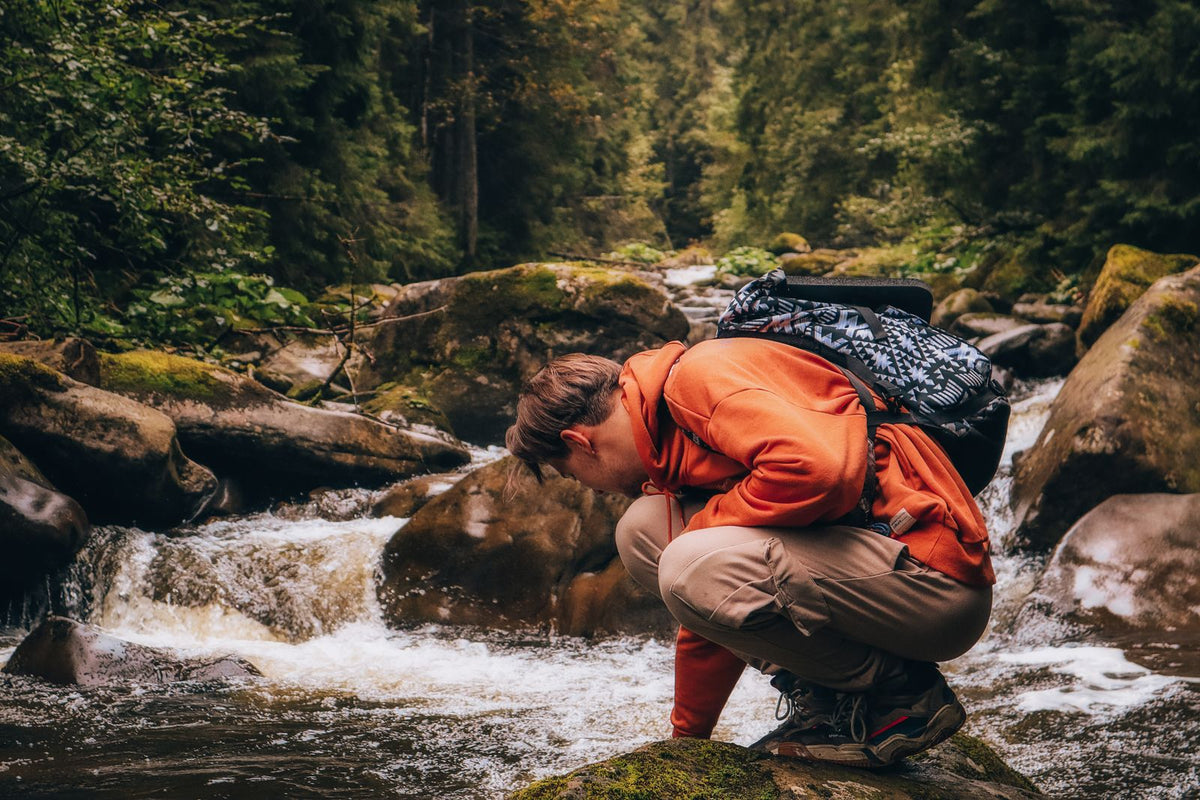
There's a moment on every first backpacking trip when it hits you. You're two miles from the trailhead, the car is out of sight, the woods are glowing orange and gold, and you realize everything you need to survive the night is strapped to your back. It's also the moment you remember you packed three headlamps and zero spoons.
Fall is the best season to try your first overnight. The bugs have mostly packed it in, the summer crowds are back at work, the air is cool enough that climbing a hill doesn't feel like hiking through soup, and the forest puts on the best light show of the year for free.
Fall backpacking does have its own personality. Mornings are frosty, trails are carpeted with leaves that hide roots and rocks, low spots turn to mud after one rainy afternoon, and the temperature can swing thirty degrees between lunch and bedtime.
So let's talk about the fall backpacking gear that actually makes a difference on a first overnight, the stuff that keeps you comfortable from the trailhead to the campfire and back again.
Start From the Ground Up: Leg Gaiters for Fall Backpacking
On a day hike, a little mud in your boot is an annoyance. On an overnight, it's a roommate. Whatever gets into your boots on mile one is still in there at mile nine, and then it's in your tent, and then it's in your sleeping bag, and then you're questioning every decision that led you here.
That's why Pike Trail Leg Gaiters are the first thing we'd strap on for a fall backpacking trip. The full-length 16" coverage keeps mud, water, burrs, ticks, and briars from getting into your boots, and the double-stitched ripstop nylon is light enough that you won't notice it in your pack or on your legs.
The real trick is the fit. Our 7-Point Fixation System uses a micro tension adjuster at the top, three upper snaps around the calf, three lower snaps around the ankle and boot, and an extra-wide hook-and-loop closure running the full length. Because the top and bottom adjust separately, you can wear them over or under your hiking pants, with or without an extra layer, which matters a lot when it's 38 degrees at breakfast and 65 by lunch. The TPU foot strap with a metal buckle adjusts for height and keeps everything planted, and the hook-and-loop closure is quick to get on and off, even with gloves.
Fall gaiter tip: put them on at the trailhead, not "when it gets muddy." By the time you notice the mud, it has already noticed you. Black and Olive Drab both blend right in with a fall forest (and hide trail grime like a champ).
Waterproof Hiking Socks: The Overnight Secret Weapon
Here's a hard truth about backpacking: wet feet don't dry overnight in a tent. Damp socks at bedtime are damp socks at sunrise, except now they're also cold. Few things test your love of the outdoors like pulling a clammy sock onto a frozen foot at 6 a.m.
This is where Pike Trail Waterproof Breathable Socks earn their spot in the pack. They use a three-layer construction: a durable nylon outer layer, a waterproof breathable membrane, and a Coolmax inner layer that wicks moisture away from your skin. They're waterproof from the toe to the bottom of the cuff, so dewy meadows, splashy low spots, and soggy leaf piles stay on the outside where they belong.
They also hold warmth well in cold weather, which makes them a great pair to keep dry for camp. Our favorite fall backpacking system:
- Hiking pair: waterproof socks on the trail, gaiters over the top to keep mud and debris out of your boots.
- Camp pair: a clean, dry pair of socks sealed in a zip bag that only comes out after the tent is up. This pair is sacred. Guard it with your life.
- Sleep tip: tuck tomorrow's socks inside your sleeping bag so they're not ice-cold in the morning.
One heads-up: these socks are thicker than average, so try them on with your hiking boots at home before the trip.
Carbon Fiber Trekking Poles for Hiking With a Heavy Pack
The first time you shoulder a loaded backpack, you'll understand why so many backpackers swear by trekking poles. An extra 20-plus pounds on your back changes everything: climbs feel steeper, descents feel sketchier, and your knees start filing formal complaints somewhere around mile five.
Pike Trail Carbon Fiber Trekking Poles give you two extra points of contact, which helps with balance and takes some of the impact off your knees and joints on the way down. At just 7.4 oz per pole, they're lighter than aluminum poles, so they won't add much to your load. They extend from 24" to 54" with secure flip locks, and the natural cork grips with EVA foam extensions let you choke down on steep climbs without stopping to readjust.
Fall-specific pole tips:
- Probe the leaves. A pole tip is the perfect way to check whether that innocent-looking leaf pile is hiding a root, a rock, or an ankle-sized hole.
- Swap in mud baskets for soggy bottomland trails. Your poles come with rubber tips, mud baskets, and snow baskets, and if you lose a piece on the trail, replacement tips and baskets are easy to grab.
- Double duty at camp. Plenty of backpackers use their poles to prop up a tarp or vestibule. Just don't use them as roasting sticks. We've seen it. We've wept.
If you want more on handling slippery fall descents, check out our guide to fall hiking gear for leaf-slick trails. Everything in it applies double when you're carrying a full pack.
Camp Comfort: The Ultralight Chair Debate
Every backpacking group has the debate. One person counts every ounce. Another person shows up with a camp chair and, two hours later, is the only one at the fire whose back doesn't hurt. Guess who everyone is jealous of?
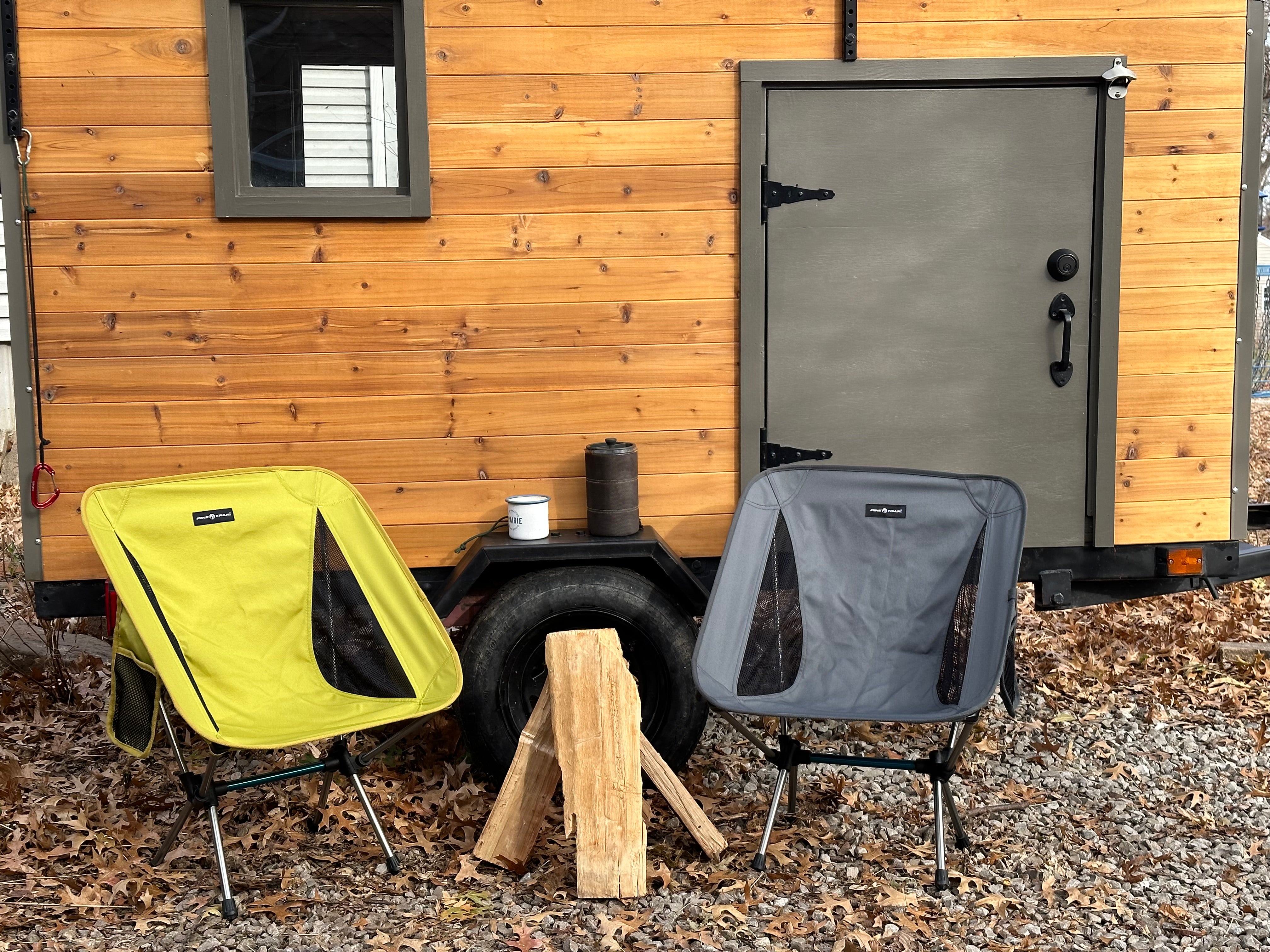
The Pike Trail Ultralight Chair weighs 2.2 pounds, folds down to 13" x 5" x 6", and holds up to 330 pounds thanks to aircraft-grade aluminum parts. It snaps together in seconds and has two built-in cup holders, which means your hot cocoa finally has a home that isn't a lumpy rock. For a short first overnight, a couple of miles in, it's a luxury that pays off the moment you sit down to watch the sunset through the trees. Count your ounces, then decide if your back is worth 2.2 pounds. (Spoiler: it usually is.)
Your First Fall Backpacking Checklist
Beyond the gear above, here are the basics that make a first overnight go smoothly:
- Layers, plus a warm hat and gloves: a moisture-wicking base layer, an insulating mid-layer, and a rain shell. Avoid cotton. It holds moisture and keeps you cold.
- A sleeping bag and pad rated for the low: check the overnight forecast, not the daytime high, and choose a pad that insulates you from the cold ground.
- Water treatment: a filter or purification tablets for streams and springs along the way.
- Headlamp with fresh batteries: fall days are short, and it gets dark earlier than your summer brain expects.
- A map and a plan: tell someone your route and when you'll be back, and check whether your trail or campsite requires a permit.
And yes, fall is still tick season in a lot of places, especially in the Midwest and South. Do a full tick check at camp and again when you get home. Our tick prevention guide covers the details.
Pick a Short Trail and Just Go
The best first backpacking trip isn't an epic. It's a short loop with a pretty campsite, maybe two to five miles in, close enough to the car that a forgotten spoon is a funny story instead of a crisis. Look for state parks or established backpacking trails near you with designated sites, check the weather, and pick a weekend while the leaves are still putting on a show.
You'll probably overpack. You'll definitely forget something. And you'll almost certainly lie in your tent that night listening to the leaves rustle overhead, grinning like a kid, already planning the next one. That's the whole point.
So lace up, strap on those gaiters, pack the dry socks, and go spend a night under the fall canopy. The woods are waiting, and they look amazing this time of year.
Happy trails, and see you out there!
— The Pike Trail Crew
Wander More. Worry Less.