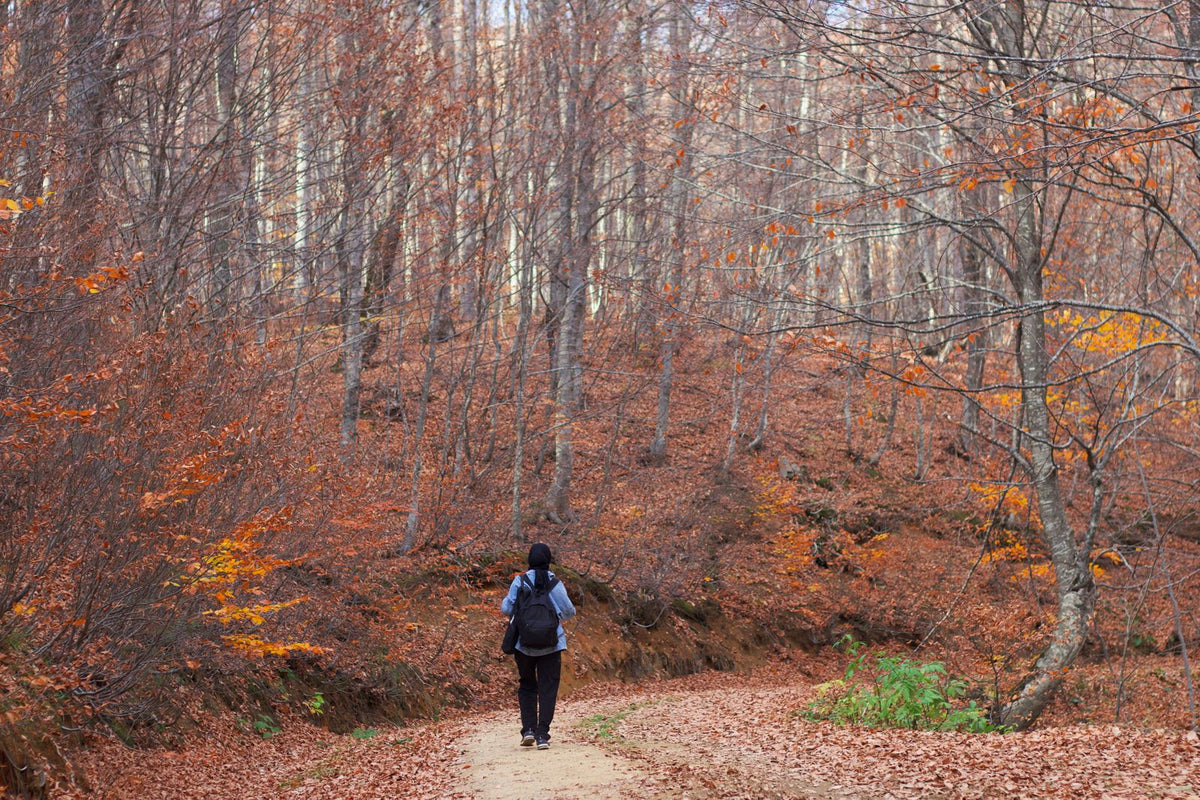
Every October, the whole internet loses its mind over fall color. Leaf-peeping traffic jams. Pumpkin-spice trail selfies. Parking lots full by 8 a.m. And then, sometime in early November, the leaves let go, the crowds go home, and the woods quietly hand out the best views of the entire year to whoever's still paying attention.
Welcome to leaf-off season. The canopy that hid every bluff, ridge and hollow all summer is now a carpet under your boots. Suddenly you can see the river from the ridgeline, the rock shelters along the hillside, and the next three folds of hills rolling off toward the horizon. It's like someone finally cleaned the windshield.
It's also a slightly different hiking game than the sunny October stroll. Mornings are frosty, afternoons are short, trails hide under a few inches of crunchy leaves, and that one creek-bottom section of trail is never, ever fully dry. So let's talk about how to enjoy late-fall hiking to the fullest, without coming home cold, soggy, or picking burrs out of your socks for a week.
Why Late-Fall Hiking Is Underrated
Here's the case for hitting the trail in late November instead of hibernating on the couch:
- The views open up. With the leaves down, overlooks that were "a nice view of some trees" in July become actual panoramas. Bluff-top trails especially shine this time of year.
- The crowds thin out. The fair-weather hikers have retreated indoors. You'll often have the trailhead to yourself, plus a few chickadees who don't mind the company.
- No sweat, literally. Cool temps mean you can climb that big hill without arriving at the top looking like you just ran through a sprinkler.
- Fewer bugs. Mosquitoes have mostly clocked out. (Ticks, sadly, haven't completely. More on that in a minute.)
The trade-off is that the ground is doing a lot more work. Leaf litter hides roots and rocks, low spots stay muddy for days after a rain, and frost turns into slop by noon. Your feet and legs are where late-fall hiking is won or lost.
Leg Gaiters for Late-Fall Hiking: Your Boots' Best Friend
A late-November trail is a lot like a bowl of cereal: leaves on top, mystery underneath. Step through a drift of oak leaves and you might find a dry trail, a wet hole, or a tangle of last summer's briars that have been waiting all year to grab your ankles.
That's where a good pair of Pike Trail Leg Gaiters earns its keep. The 16-inch full-length coverage keeps mud, water, burrs and briars out of your boots and off your pant legs, which means no more stopping every quarter mile to dig a sticky seed pod out of your sock. They're double-stitched ripstop nylon, so they shrug off brush but don't weigh you down.
The part people tend to love most is the fit. Our 7-Point Fixation System lets you adjust the top and bottom of the gaiter separately, so they stay put whether you're wearing slim hiking pants on a 55-degree afternoon or bulky insulated layers on a 25-degree sunrise. The extra-wide hook-and-loop closure goes on and off quickly, even with gloves on, which matters a lot more in November than it did in June. Black and Olive Drab both blend right into a brown-and-gray late-fall forest.
Pro tip: put your gaiters on at the trailhead, not "when it gets muddy." It always gets muddy. Usually right after you decided it wouldn't.
Waterproof Hiking Socks: Because Cold + Wet = Miserable
In summer, a wet foot is annoying. In late fall, a wet foot is a countdown timer. Once cold water gets in, your toes go from "a little chilly" to "are these still attached?" surprisingly fast.
Pike Trail Waterproof Breathable Socks use a three-layer build: a durable knit outer, a waterproof breathable membrane in the middle, and a Coolmax inner layer that wicks sweat away from your skin. Translation: water from that leaf-covered puddle stays out, and the sweat from your big hill climb doesn't stay in. They're waterproof from the toe to the bottom of the cuff, they help retain warmth in cold weather, and they're designed to help prevent blisters and chafing.
One honest heads-up: they're thicker than your everyday socks, so try them on with your hiking boots before your big outing to make sure everything fits comfortably. Paired with gaiters, though, this is about as close as you can get to a "dry feet guarantee" on a soggy November trail. (The Pine color in particular looks right at home on the forest floor.)
Carbon Fiber Trekking Poles for Leaf-Covered Trails
Leaf-off season has a sneaky hazard: you can't see what's under the leaves. That smooth-looking slope might hide a layer of acorns rolling like ball bearings, a slick rock, or a root that's been practicing its tripping technique all year. We covered that slippery side of fall in our post on fall hiking gear for leaf-slick trails, and the short version still applies: four points of contact beat two.
Pike Trail Carbon Fiber Trekking Poles weigh just 7.4 oz each, so they're easy to carry all day. They help with balance and take some of the pounding off your knees on long descents, which is exactly what you want when you're heading down a steep bluff trail onto damp leaves. The natural cork grips feel good in cold hands, and the EVA foam extensions give you a spot to choke down on steep climbs without readjusting the length.
They also come with rubber tips, mud baskets and snow baskets, so you're already set for the soggy creek bottoms now and the first snowfall later. Bonus late-fall use: a pole makes a great "leaf probe" for checking whether that innocent-looking pile is hiding a puddle. Forest Green, Camp Fire and Dark Red Sangria are all ready for the trail.
Take a Seat at the Overlook
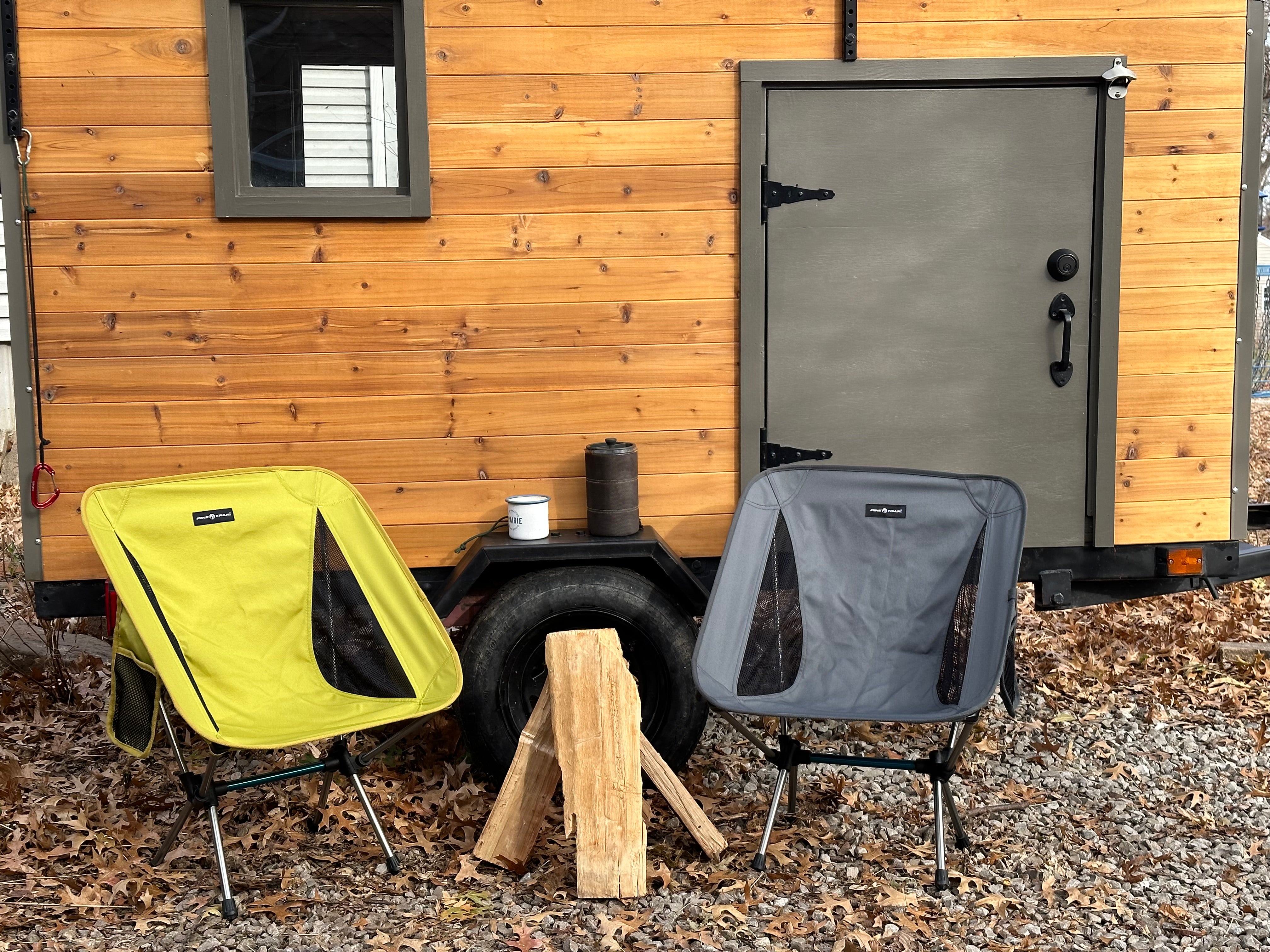
The whole point of leaf-off hiking is the view, so don't rush it. Sitting on a cold, damp rock is one way to enjoy a panorama, but your backside will file a complaint. The Pike Trail Ultralight Chair weighs only 2.2 pounds, folds down to 13" x 5" x 6", and holds up to 330 pounds. Strap it to your pack, set it up at the overlook, pour something hot from your thermos, and watch the hills turn gold in that low afternoon sun. That's a summit break you'll remember.
A Few Late-Fall Hiking Tips
- Watch the clock. Daylight is short this time of year. Know when sunset is and plan to be back at the car well before it, with a headlamp in your pack just in case.
- Follow the blazes. When leaves cover the trail, the tread can disappear. Keep an eye on trail markers, especially at junctions and on wide, flat ridgetops where it's easy to wander off.
- Layer up, then layer down. Start a little cold. You'll warm up within the first mile, and it beats sweating through your base layer and freezing at the overlook.
- Don't forget about ticks. Some ticks stay active on mild fall and winter days. Do a quick check after your hike, and see our tick prevention guide for more tips.
- Pack something warm to drink. Not technically gear. Absolutely essential.
Get Out There Before Winter Sets In
Late fall is a short, sweet window. The leaves are down, the views are wide open, the trails are quiet, and the air has that crisp, clean bite that makes a cup of coffee taste ten times better. Lace up, gaiter up, grab your poles, and go see what the woods have been hiding all summer.
We'd love to hear about your favorite leaf-off overlook. Happy trails, and enjoy the view!
— The Pike Trail Crew
Wander More. Worry Less.