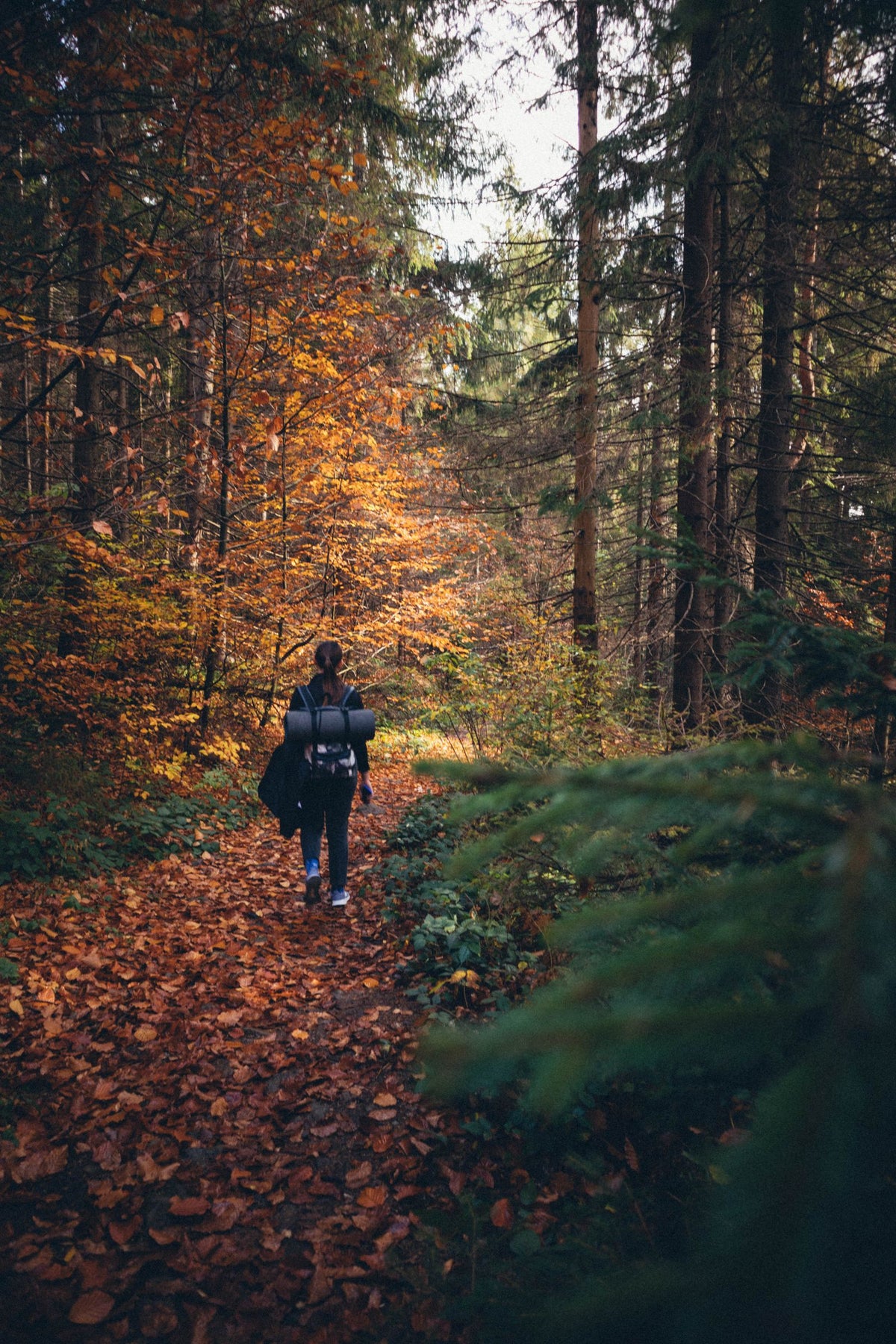
Somewhere around the week of Thanksgiving, Missouri quietly flips a switch. The leaves are down, the summer crowds are gone, the parking lots at the trailheads have actual empty spaces, and the woods take on that crisp, gray-brown, "nobody's here but me and a very judgmental squirrel" vibe. It's one of the best times of year to hike, and almost nobody talks about it.
Early winter is state park season. The trails that were packed in October are suddenly yours. You can see the shape of the land again: the bluffs, the sinkholes, the boulders, the creek bends that were hiding behind a wall of green all summer. And the best part? Missouri's state parks are free to enter. No gate fee, no reservation for a day hike, just pull in, lace up and go.
Of course, early winter also brings a few surprises. Frosty mornings that turn into muddy afternoons. Leaves that are slick on top and slicker underneath. Temperatures that start at "where are my gloves" and end at "why did I wear three layers." A little preparation goes a long way toward keeping the day fun instead of soggy.
So here's our guide to early-winter state park hiking in Missouri: a few places worth the drive, what the trails are actually like this time of year, and the gear that keeps you comfortable while you enjoy them.
Why Early Winter Is the Best-Kept Secret in State Park Hiking
Let's make the case. In early winter you get:
- Views you can't get in summer. With the canopy gone, rock formations, ridgelines and creek valleys open right up.
- Quiet trails. Fewer people means more wildlife sightings and fewer "on your left!" moments.
- No sweating through your shirt in the first mile. Cool air is a hiker's best friend on climbs.
The trade-off is the ground. Between frost, thaw, rain and a deep layer of leaves, early-winter trails can go from crunchy to squishy in an afternoon. That's where good footwear habits and a little extra protection earn their keep.
Missouri State Parks Worth a Winter Day Hike
Rock Bridge Memorial State Park (Columbia)
Our hometown favorite sits just about five miles south of Columbia, and its trails are open year-round. The Devil's Icebox Trail is a boardwalk that leads to the park's natural rock bridge and the Devil's Icebox, a double sinkhole filled with cool cave air. With roughly 20 miles of trail across the park, you can do a quick boardwalk stroll or stack loops into a real leg-burner. With the leaves down, the karst landscape looks like a geology textbook come to life.
Elephant Rocks State Park (Iron County)
Giant, billion-year-old granite boulders lined up like a train of circus elephants. It's as fun as it sounds. A self-guided trail with Braille signage winds through the rocks, and another trail leads to an old engine house and quarry. Granite plus cold, damp mornings equals some genuinely slick spots, so this is a place where steady footing matters.
Your Closest State Park (Seriously)
There's likely a state park within a reasonable drive of wherever you live, and Missouri State Parks has made a tradition of First Day Hikes on New Year's Day. Pick a park you've only seen in summer and go see it with the leaves down.
Leg Gaiters: The Unsung Hero of Muddy Winter Trails
Here's the thing nobody tells you about early-winter hiking: the mud doesn't stay on your boots. It climbs. One sloppy creek-bottom stretch and your pant legs look like you lost a wrestling match with a pig. Add wet leaves, a little frost melt and the occasional briar patch reaching across the trail, and your lower legs take a beating.
That's why Pike Trail Leg Gaiters are our go-to for this season. They give you full-length 16-inch coverage that keeps mud, water, snow, ticks and briars out of your boots, and they're made from double-stitched ripstop nylon that's durable but still lightweight. Our 7-Point Fixation System (a micro tension adjuster up top, three upper snaps and three lower snaps) lets you dial in the fit around your calf and your boot separately, so they stay put instead of sagging around your ankles by mile two.
That split top-and-bottom adjustment also means they fit over or under your hiking pants, with or without winter layers. On a day that starts at 28 degrees and ends at 52, that flexibility is gold. The extra-wide hook and loop closure is quick to get on and off, even with gloves, and the TPU foot strap is built for sub-zero conditions, so a frosty morning won't faze it. Classic Black and Olive Drab both blend right into a gray-brown winter woods.
Bonus: ticks don't all clock out at the first frost, and on warmer winter days they can still be out looking for a ride. Gaiters are a simple physical barrier, and our tick prevention guide has more tips for staying ahead of them.
Waterproof Hiking Socks for Frost, Thaw and "Oops, That Was Deeper Than It Looked"
Cold and wet is the combination that ruins a winter hike. You can tolerate cold. You can tolerate wet. But cold, wet feet will have you checking the map for the shortest route back to the car.
Pike Trail Waterproof Breathable Socks are designed for exactly this. Their three-layer construction pairs a durable outer knit with a waterproof, breathable membrane in the middle and a Coolmax-blend inner layer that wicks moisture away from your skin. They're waterproof from the toe to the bottom of the cuff, help retain warmth in the cold, and are designed to help prevent blisters and chafing. One heads-up: they're thicker than your average sock, so try them with the boots you plan to hike in.
Pair them with gaiters and you've basically built a moat around your feet. Water and mud have to get past the gaiter first, and if a little sneaks in, your socks are there to keep your toes dry and happy.
Carbon Fiber Trekking Poles for Leaf-Slick, Frosty Descents
If you've ever stepped on a pile of leaves that turned out to be hiding a wet root, you know the "arms windmilling, dignity leaving the body" feeling. Early-winter descents are where that happens most. We've written before about gearing up for leaf-slick trails, and in winter, add frost and freeze-thaw mud to the list.
Pike Trail Carbon Fiber Trekking Poles give you two extra points of contact for those moments. At just 7.4 ounces per pole, they're light enough that you'll forget they're in your hands until you need them. They're shock-absorbing to help reduce impact on your knees and joints, adjust from 24 to 54 inches with secure flip-lock adjusters, and have comfortable natural cork grips with EVA foam extensions for choking up on steep climbs.
They also come with rubber tips, mud baskets and snow baskets. Mud baskets are the unsung heroes of a Missouri winter, keeping your pole tips from sinking into soft trail. And if we actually get snow this year, snap on the snow baskets and keep on hiking. Forest Green, Camp Fire or Dark Red Sangria: pick the one that matches your trail personality.
Don't Forget the Post-Hike Sit
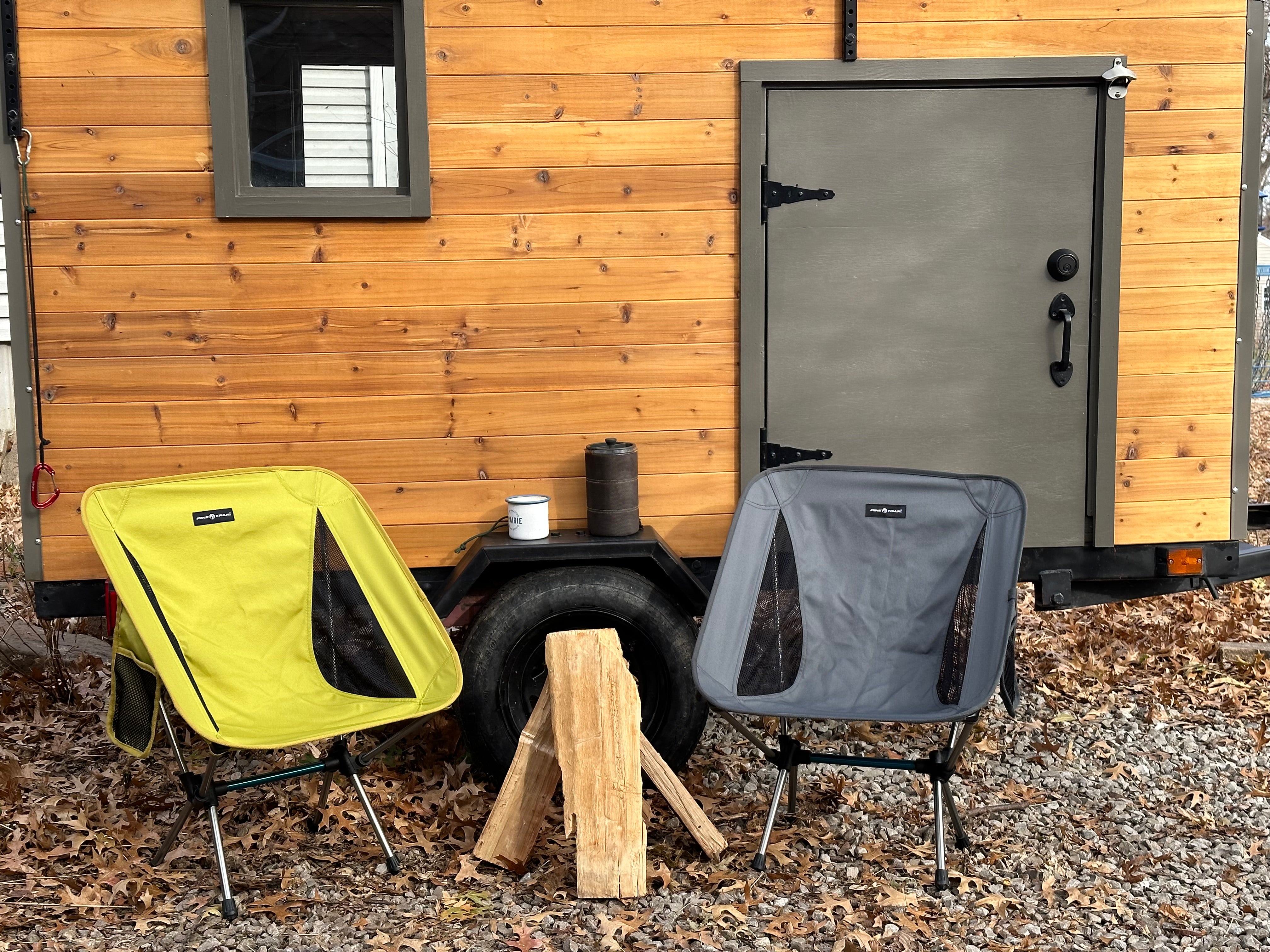
Every great state park hike deserves a victory lap, and by that we mean sitting down. Whether it's at the trailhead with a thermos of coffee or at an overlook while you wait for the sunset, a comfortable seat makes the end of the day better. The Pike Trail Ultralight Chair weighs just 2.2 pounds, holds up to 330 pounds, and folds down to 13" x 5" x 6", so it tosses in the car (or your pack) without a second thought. It even has two built-in cup holders for that thermos.
Your Early-Winter State Park Hiking Checklist
- Leg gaiters for mud, wet leaves, briars and ticks
- Waterproof breathable socks (test them with your boots first)
- Trekking poles with mud baskets on
- Layers you can add and shed: base layer, warm mid layer, wind or rain shell
- Gloves and a warm hat
- A headlamp, because early-winter daylight disappears fast
- Water, snacks and a quick check of the park's website for trail conditions
Get Out There While the Trails Are Quiet
Early winter is a gift for hikers who are willing to bundle up a little. The views are wide open, the trails are peaceful and the parks are free. Grab a friend, pick a park and go make a cold, muddy, wonderful memory. We'll be out there too, probably with a little mud on our gaiters and a big grin on our faces.
Happy trails, and stay warm out there!
— The Pike Trail Crew
Wander More. Worry Less.