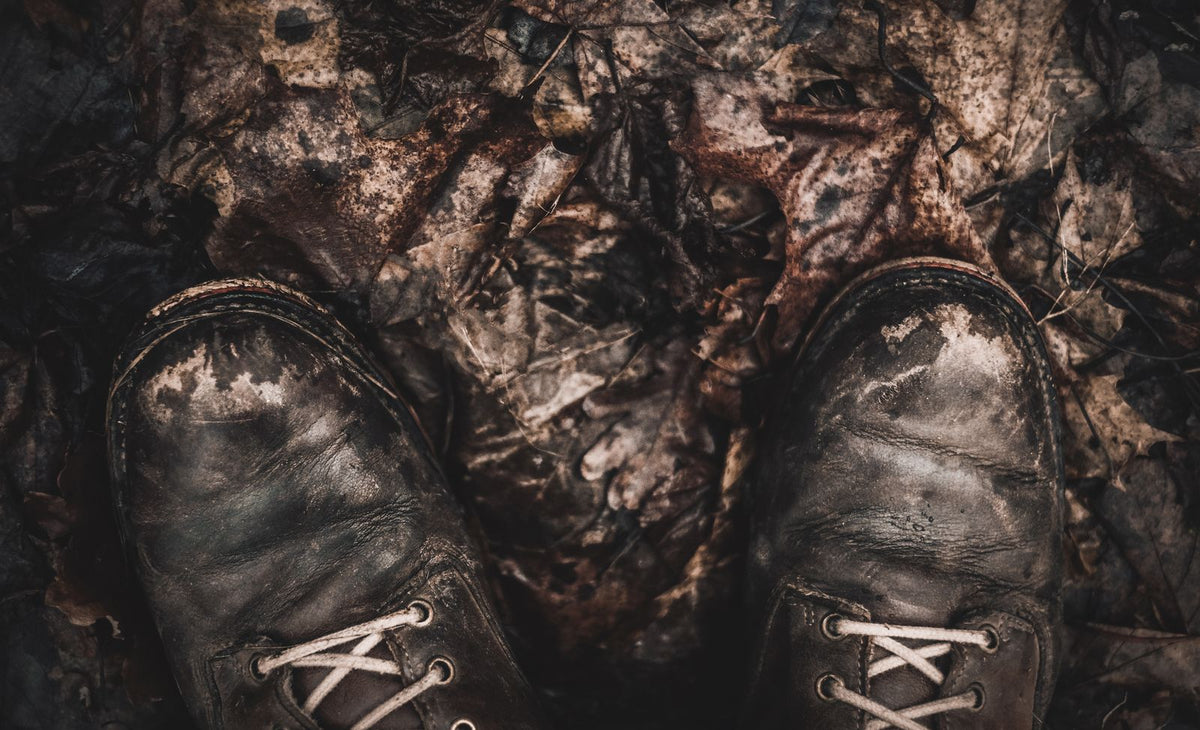
There's a moment on every late-fall hike when the trail stops being a trail and starts being a negotiation. One minute you're crunching through golden leaves feeling like the star of a flannel catalog. The next, you're staring at a forty-foot stretch of brown pudding, doing math about which rock looks least likely to betray you.
Welcome to mud season, fall edition. The leaves are down, the sun sets before you've finished your trail mix, and a week of drizzle has turned your favorite loop into something with the consistency of brownie batter. It's also, quietly, one of the best times of year to be out there: cool air, no bugs to speak of, open views through bare branches, and a parking lot with actual empty spaces.
The trick is showing up ready to get a little dirty without letting the mud run the show. Here's how to hike muddy trails in late fall, keep your feet dry and your knees happy, and still come home grinning (and only moderately crusty).
Why Fall Trails Get So Muddy
Summer trails get baked hard by the sun. Fall trails don't get that luxury. Shorter days, cooler temperatures and a thick blanket of fallen leaves all slow down evaporation, so after a rain the ground stays soft for days. Add a few hundred boots on a popular weekend and you've got ruts, puddles and those sneaky leaf-covered mud pits that look solid right up until your foot disappears to the ankle.
Walk Through the Mud, Not Around It
This is the part nobody wants to hear: the right way to handle a muddy trail is usually straight down the middle. Every time a hiker tiptoes around a puddle on the grassy edge, the trail gets a little wider. Enough people do that and a narrow footpath turns into a muddy highway, trampling plants and speeding up erosion. Land managers and Leave No Trace folks have been asking hikers to stay on the tread for years, and they're right.
Which means your gear has a job: making "straight through the middle" a comfortable choice instead of a miserable one. That's where a good pair of gaiters, the right socks and a set of poles earn their place in your pack.
Leg Gaiters: Your Mud Shield From Boot to Calf
Mud doesn't just stay on the bottom of your boots. It splashes, it slops over the top and it finds its way into your socks, where it becomes grit, and grit becomes hot spots. A pair of Pike Trail Leg Gaiters closes that gap. The full-length 16" coverage keeps mud, water and leaf debris out of your boots, and the double-stitched ripstop nylon wipes off at the car instead of soaking up half the trail.
The real difference-maker on a cold, wet day is fit. Pike Trail's 7-Point Fixation System uses a micro tension adjuster at the top, three snaps around the calf and three around the ankle, plus an extra-wide hook and loop closure, so the gaiter stays put instead of sagging into the muck. The top and bottom adjust separately, which matters in late fall when you might be wearing thicker pants or a base layer one weekend and lightweight hiking pants the next.
Down at the boot, a TPU foot strap with a metal buckle holds everything in place and is built for cold conditions, so you're not dealing with a soggy strap that stretches out halfway up the climb. For fall, the Black and Olive Drab colors are perfect: Black hides mud like a champ, and Olive Drab just looks right against a forest floor full of oak leaves.
Waterproof Hiking Socks: The Backup Plan Your Feet Deserve
Gaiters keep mud from pouring in over the top. But let's be honest: at some point you're going to misjudge a puddle that turns out to be deeper than it looked. When that happens, Pike Trail Waterproof Breathable Socks are the difference between "huh, that was deep" and squishing for the next three miles.
They use a three-layer build: a durable nylon outer, a waterproof and breathable membrane in the middle, and a Coolmax-blend inner layer that pulls sweat away from your skin. They're waterproof from the toe to the bottom of the cuff, so pairing them with gaiters gives you a nice overlapping system. They also help with warmth retention, which is a big deal on those damp 40-degree mornings when wet feet go from uncomfortable to downright cold in a hurry.
A quick tip: these socks are thicker than your average hiking sock, so try them with your boots at home before trail day. If your boots are snug, you may want to loosen the laces a bit. Pine and Black are both great picks for fall.
Carbon Fiber Trekking Poles: Four-Wheel Drive for Muddy Hiking
Mud changes the physics of hiking. Your footing slips a little on every step, descents get slick, and every time a boot slides you're relying on your knees and core to catch you. Trekking poles turn you from a two-legged creature into a four-legged one, and in mud that is a beautiful upgrade.
Pike Trail Carbon Fiber Trekking Poles weigh just 7.4 oz each, so they don't feel like a burden on long days. They adjust from 24" to 54" with flip-lock adjusters, which comes in handy on muddy descents: lengthen them a bit going downhill so you can plant ahead of yourself and lower your weight under control. The shock absorption takes some sting out of each step, and the cork grips with EVA foam extensions stay comfortable even when your hands are cold and damp.
Here's the mud-specific secret: the poles come with mud baskets. Without them, a pole tip can sink into soft ground like a straw into a milkshake, which is not the stability you were hoping for. Mud baskets keep the tip riding near the surface so you get real support. Save the rubber tips for pavement and rock days. Forest Green, Camp Fire and Dark Red Sangria are all ready to hit the trail.
Muddy Trail Hiking Technique (a.k.a. How Not to Do the Splits)
- Shorten your stride. Smaller steps keep your weight centered over your feet, which makes a slip far less dramatic.
- Step flat-footed. Putting your whole sole down gives you more grip than landing on your heel.
- Watch out for leaf-covered mud. Wet leaves on top of mud are nature's banana peel. Probe with a pole first if you can't see the ground.
- Slow down on descents. There's no prize for getting to the bottom first, especially sliding.
- Check trail conditions first. Some parks close certain trails when they're saturated to protect them. Respect those closures and pick a rockier or gravel route instead.
If slick leaves are your nemesis too, our guide to fall hiking gear for leaf-slick trails has more tips for keeping your footing on autumn descents.
The Post-Hike Mud Routine
A muddy hike isn't over at the trailhead. Pack a small kit in the car so the drive home isn't an exercise in regret:
- A spare pair of dry socks and some comfy shoes for the ride home
- A trash bag or tote for muddy boots, gaiters and anything else that went swimming
- An old towel to keep your floor mats from becoming a second trail
- A brush or stick to knock mud off your boots before you leave, which also helps avoid carrying seeds from one trail to the next
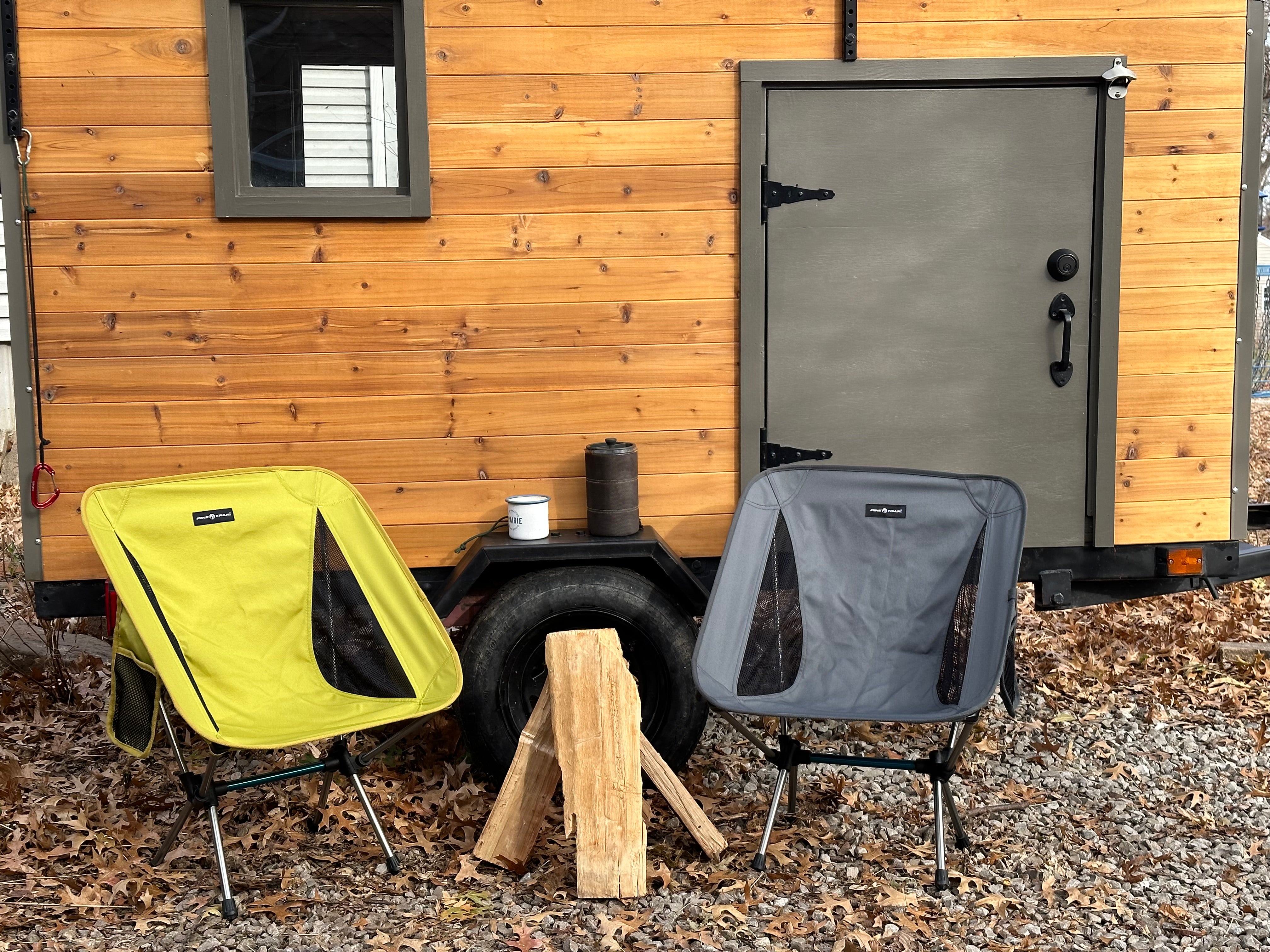
And if you'd rather not do the one-legged hop beside your car while peeling off muddy boots, toss a Pike Trail Ultralight Chair in the trunk. It weighs just 2.2 pounds, holds up to 330 pounds and folds down to just 13" x 5" x 6", so it's an easy add for a sit-down boot swap, a thermos of coffee and a few minutes watching the sun drop behind the trees.
Embrace the Mud
Late fall hiking asks a little more of you. The trail's softer, the days are shorter and the mud is undefeated. But the quiet woods, the crisp air and those wide-open views through bare trees are worth every squishy step, especially when your feet stay dry and your knees stay happy.
So lace up, strap in, grab your poles and go straight down the middle. The trail will thank you, and you'll have a great story about the puddle that tried to keep your boot.
See you out there!
— The Pike Trail Crew
Wander More. Worry Less.