The orange army has gone home. The gun-season trucks have cleared out of the gravel pull-offs, the neighbor's "just sighting in" volleys have finally stopped, and the deer in your woods have spent the last couple of weeks rewriting every pattern you thought you knew. If you're still holding a tag (or already dreaming about next fall), this is the moment to lace up and go find out where they went.
Late-season deer scouting is a strange, wonderful kind of detective work. The leaves are down, the sign is easy to read, and the deer are being driven by one simple, relatable motivation: food. Find the groceries and you'll find the deer. Easy, right? Well, mostly. There's also the small matter of walking miles of frosted bottoms, crossing seeps that never dried out, and bulldozing through briar patches that seem personally offended by your existence.
Here in Missouri, archery deer season reopens on November 25 and runs through January 15, so the woods are open for bowhunters again right now. Whether you're scouting for a late-season bow sit next week or building a map for next October, the plan is the same: cover ground, read sign, stay comfortable, and don't spook the whole neighborhood while you're at it.
Let's talk about where to look, what to look for, and the gear that keeps you out there long enough to actually find something.
Why Late-Season Deer Scouting Pays Off
The post-rut, post-gun-season woods are an open book. With the canopy gone, you can see trails, beds, rubs and scrapes from a long way off. Deer have been pressured, so they've tucked into the thickest, nastiest, most inconvenient cover on the property, usually close to whatever food is left: standing crops, cut grain fields, acorn flats that still have a few stragglers, or green winter wheat.
That combination makes late-season scouting some of the most useful scouting you'll do all year. What you learn now tells you how deer use the property under pressure, which is exactly the information you'll want next fall when the pressure starts all over again.
Where to Scout: Food, Cover and the Path Between
Think of late-season deer like a person who has just survived a stressful family holiday. They want two things: a comfortable couch to hide on and something to eat. Your job is to find the couch, the fridge, and the hallway between them.
- Food sources: Look for fresh tracks and droppings at the edges of cut fields, food plots and any oak flat still holding acorns. Lots of fresh sign means it's on the menu.
- Thick bedding cover: Cedar thickets, cutovers, CRP grass, brushy fencerows and south-facing slopes that catch the winter sun. If it looks miserable to walk through, deer probably love it.
- Travel routes: The trails connecting bedding to food, especially ones running along creek bottoms, ditches and inside field corners. Rubs and old scrapes along these routes are your breadcrumbs.
A tip worth repeating: scout the edges of bedding cover, not the middle. Blowing a mature deer out of its bed in late December is a great way to teach it to relocate. Glass from a distance, walk the perimeter, and save the deep dive for after the season closes.
Leg Gaiters for Deer Hunting: Your Briar-Proof Scouting Uniform
Here's the honest truth about late-season scouting: the best sign is always on the other side of something unpleasant. Multiflora rose. Blackberry canes. A wet, grassy bottom that soaks your pant legs to the knee before you've gone fifty yards. A frozen-on-top, mud-underneath field edge that swallows your boots like quicksand.
This is where a good pair of Pike Trail Leg Gaiters earns its keep. They give you full-length 16" coverage that keeps snow, water, mud, ticks and briars out of your boots, made from double-stitched ripstop nylon that's durable but still lightweight. The 7-Point Fixation System lets you dial in the fit at the calf and the ankle separately, so they lock in place over insulated boots and bulky late-season layers without slipping down around your ankles mid-stride.
The extra-wide hook and loop closure also goes on and off quickly, even with gloves, which matters a lot more on a 22-degree morning than it does in your living room. For scouting in hunting cover, the Lost Oak Camo, Defense Force Camo and Olive Drab colors blend in nicely with winter timber and dead grass. Black works too, if you prefer the "serious operator" look while you inspect deer poop.
Waterproof Socks for Hunting: Because Wet Feet End Scouting Trips Early
Nothing turns an ambitious six-mile scouting loop into a sad half-mile shuffle back to the truck faster than cold, wet feet. Late-season ground is a mix of frost, slush, puddles and creeks that are just deep enough to find the one weak seam in your boots.
Pike Trail Waterproof Breathable Socks add a backup layer of dry. Their three-layer construction puts a waterproof, breathable membrane between a nylon outer layer and a Coolmax inner layer that wicks moisture away from your skin. That means sweat from the walk in has somewhere to go, and water from that "I can definitely jump this" creek doesn't get to your toes. They're waterproof from the toe to the bottom of the cuff and help keep your feet warm in the cold.
One honest note: they're thicker than your average sock, so try them with your actual scouting boots before you head out. Pair them with leg gaiters and you've got water blocked from the top and the inside. It's the kind of combo that lets you say "let's check one more ridge" and actually mean it.
Trekking Poles for Hunters: Steadier Steps on Frozen, Leaf-Slick Ground
You know that heart-stopping moment when your boot hits a frosted log or a wet clay bank and your whole body briefly considers a career in figure skating? Late-season ground is full of those moments, and a fall miles from the truck is no joke.
A pair of Pike Trail Carbon Fiber Trekking Poles gives you two extra points of contact on steep draws, icy creek banks and frozen field ruts. At 7.4 oz per pole, they're light enough that you'll forget they're strapped to your pack. They adjust from 24" to 54", lock with flip-lock adjusters, and come with rubber tips, mud baskets and snow baskets, which is handy when a December scouting trip starts in mud and ends in snow.
Bonus scouting uses: a pole is great for probing a creek crossing before you commit, flipping back leaves to check track freshness, and pointing dramatically at a rub line while explaining your theory to a skeptical hunting buddy. If you wear out a tip in the rocks, replacement tips and baskets are easy to swap.
Glassing Food Sources from a Comfortable Seat
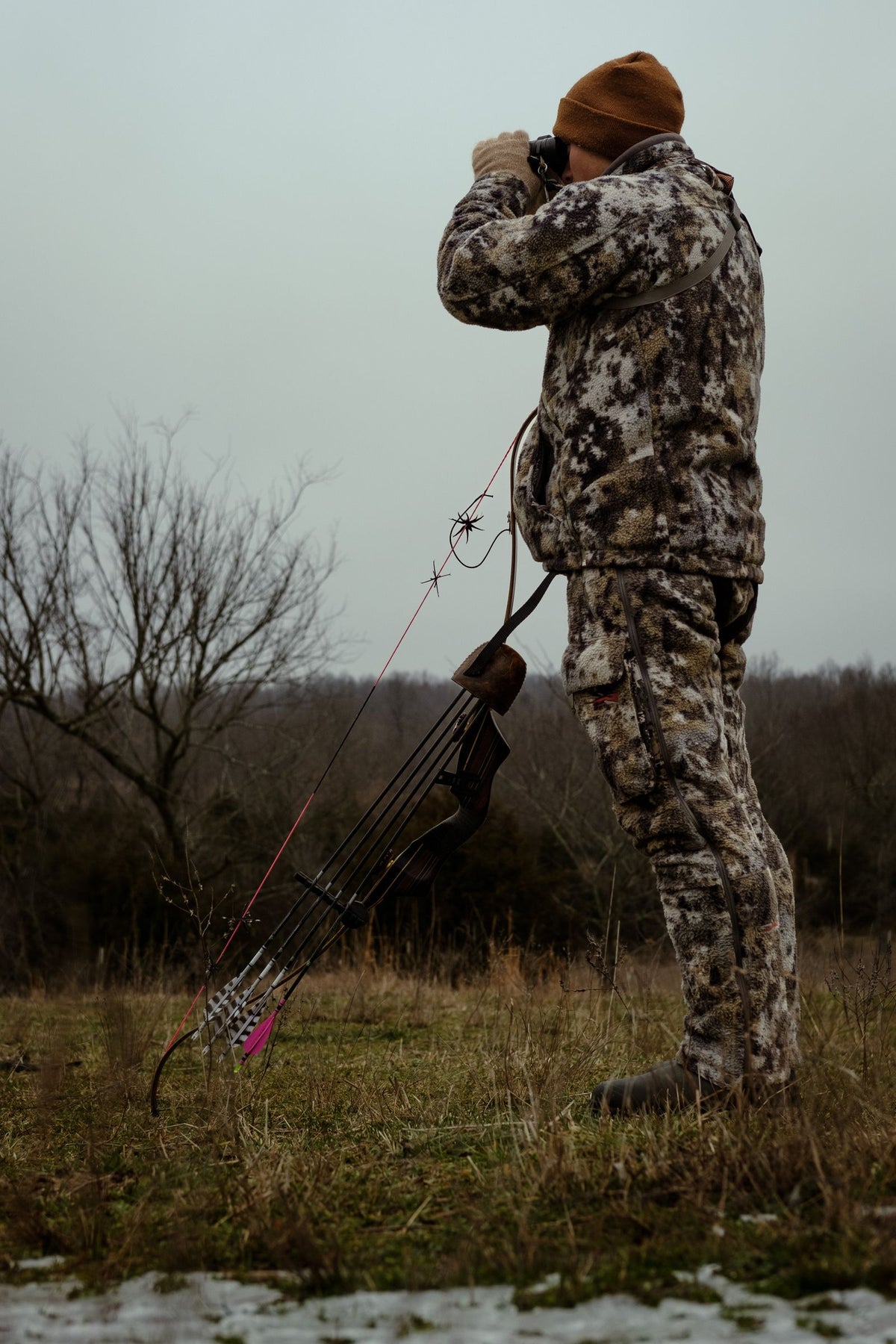
Some of the best late-season scouting doesn't involve walking at all. An hour of glassing a cut cornfield or winter wheat at last light can tell you more than a full day of tromping through bedding cover, and it doesn't put your scent all over the place.
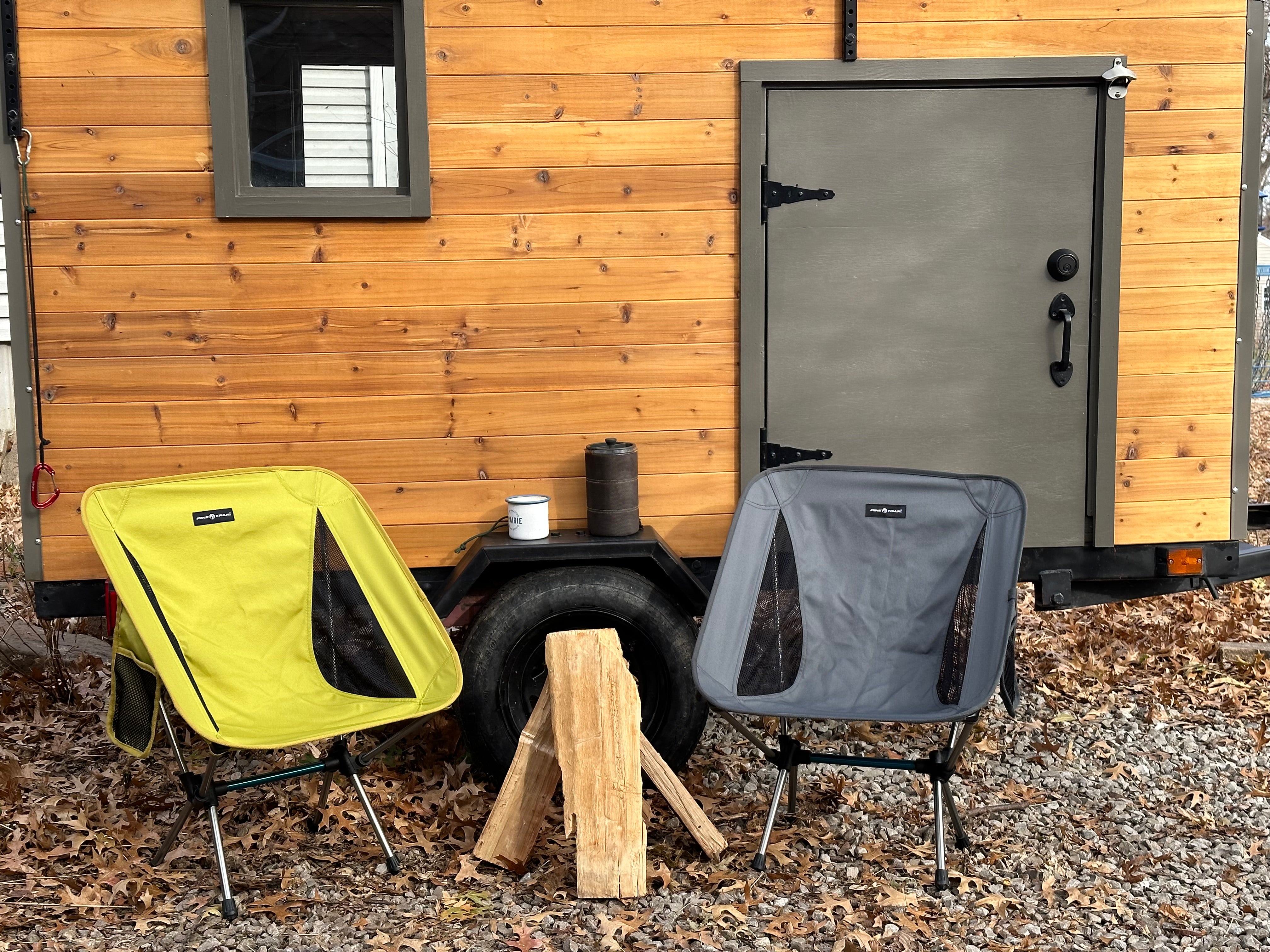
The catch is that sitting on frozen ground for an hour is a special kind of misery. The Pike Trail Ultralight Chair weighs just 2.2 pounds, folds down to 13" x 5" x 6", and holds up to 330 pounds, so it rides along in a pack without complaint and gets you up off the cold dirt for an evening glassing session along a field edge or a ridge overlook. Set up well back from the field, settle in, and let the deer come to you on the evening feed.
A Simple Late-Season Scouting Checklist
- Binoculars and a notebook (or your phone's mapping app) to mark sign, trails and bedding edges
- Leg gaiters for briars, wet grass, mud and snow
- Waterproof socks under your regular boots
- Trekking poles for icy banks and steep draws
- A light chair for evening glassing sessions
- Extra layers, a thermos of something hot and a headlamp, because December daylight runs out fast
- A quick read of current MDC regulations if you're carrying a bow, especially on public land
If you're scouting public ground, our earlier post on public land deer hunting and walking past the crowd pairs nicely with this one. Late season is when the hunters who were willing to walk a little farther really start cashing in.
Scout Smart, Stay Comfortable, Come Back Happy
Late-season deer scouting is part detective work, part endurance test, and part excuse to spend a quiet winter afternoon in the woods. The deer are telling you exactly where they want to be. You just need to stay dry, warm and upright long enough to listen. Cover the ground, glass the food, respect the bedding, and you'll walk into the rest of the season (or next fall) with a plan instead of a hunch.
Good luck out there, and may every scrape line lead somewhere good.
— The Pike Trail Crew
Wander More. Worry Less.