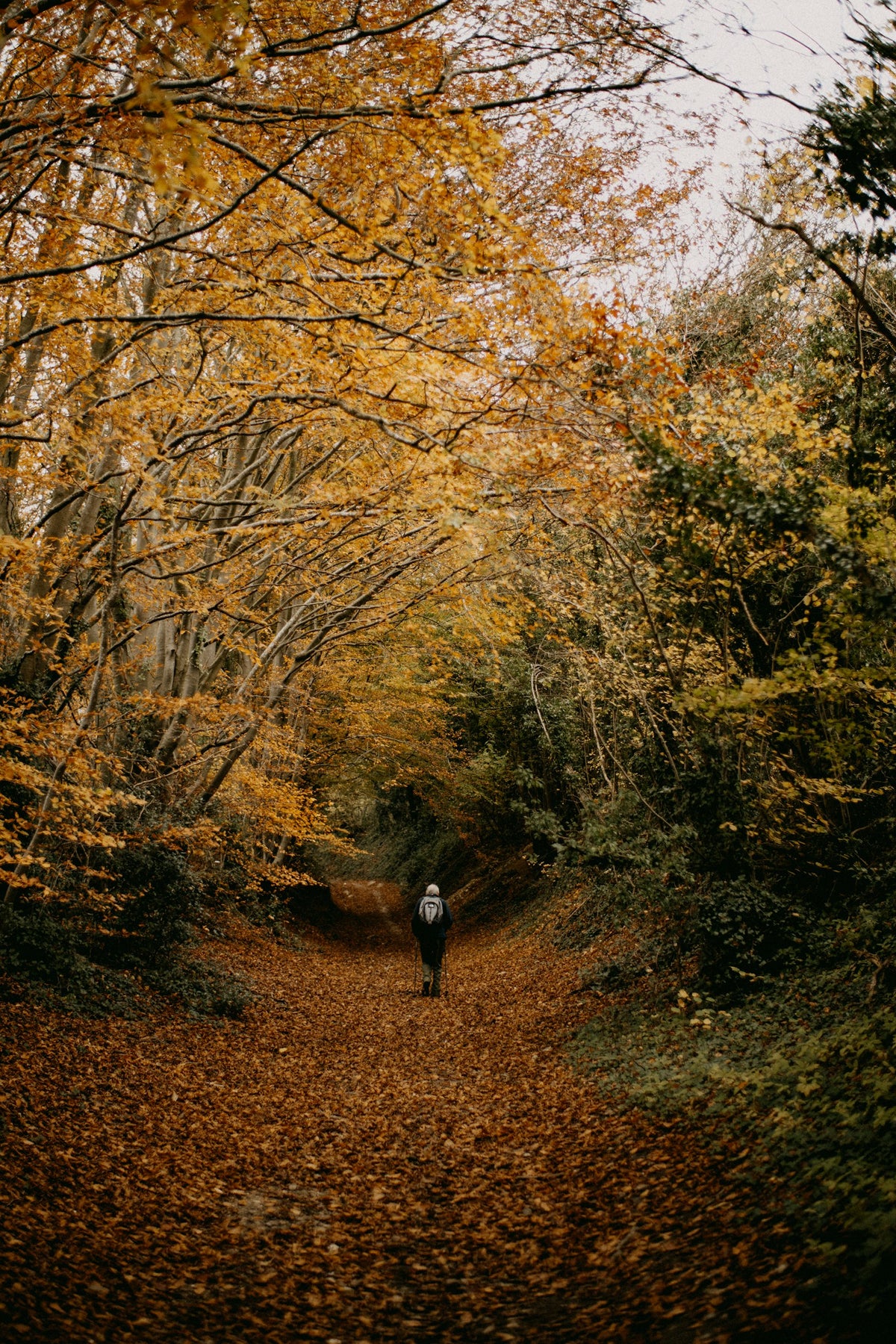
Somewhere around the first week of November, the hiking calendar pulls a fast one on all of us. The clocks fall back, the sun starts clocking out around dinnertime, and the trail you strolled in a T-shirt three weeks ago now greets you with frost on the grass and a breeze that seems to have a personal grudge.
And yet: this might be the best hiking of the year. The crowds have gone home. Most of the summer bugs have packed it in. The leaves are down, which means the views you couldn't see all summer are suddenly right there through the bare trees, like the forest finally pulled back the curtains.
The trick to loving a November day hike is simply showing up with the right kit. Not a mountain of gear, just a smarter version of what you already carry, tuned for cold mornings, short afternoons, and trails that are wet even when it hasn't rained in days. Here's how we build ours.
Why Late-Fall Hiking Needs Its Own Day Hike Kit
November trails have three personalities, sometimes all before lunch. At 8 a.m. you get frost and heavy dew that soaks every blade of grass and leaf it touches. By noon, that frost melts into a slick, muddy topcoat on any trail with a bit of clay in it. And by 4 p.m., the temperature drops fast and the light goes gold, then gray, then gone.
Summer kits aren't built for that kind of mood swing. The fixes are simple, though: keep your lower legs and feet dry, give yourself better footing, layer up so you can adjust on the move, and respect the clock. Let's go top to bottom. Well, bottom to top, since that's where most November misery starts.
Leg Gaiters for Frosty Grass, Wet Leaves and Cold Mud
If you've ever started a fall hike through a dewy meadow, you know the feeling: ten minutes in, your pant legs are soaked to the shin and the water is slowly wicking down into your socks like it has somewhere to be. That's the moment a good pair of leg gaiters earns its spot in your pack.
Our Pike Trail Leg Gaiters give you full-length 16" coverage that keeps snow, water, mud, ticks and briars out of your boots. They're built from double-stitched ripstop nylon, so they're tough without feeling like you strapped a sleeping bag to each shin. Here's what makes them especially handy in late fall:
- They fit over your layers. The 7-Point Fixation System adjusts the top and bottom independently, so they work over or under hiking pants, with or without winter layers. Thick November pants? No problem.
- Glove-friendly. The extra-wide hook and loop closure is quick on and off, even with gloves, which matters when your fingers are already lobbying to go back to the car.
- Cold-ready foot strap. The TPU strap with a metal buckle is built for sub-zero conditions, so it won't get brittle when the mornings start dipping below freezing.
Bonus: once the real cold arrives, the same gaiters carry you straight into winter hiking and snowshoe season. That's a lot of trail miles from one piece of gear. Black and Olive Drab are both great all-season picks that hide mud like a pro.
Waterproof Hiking Socks: Warm Feet Make Happy Hikers
Gaiters handle what comes from above. But November also has a way of sneaking water in from below: a squishy low spot, a puddle hiding under a pile of leaves, a "dry" creek bed that turns out to be very much not dry. Wet feet in 70 degrees are annoying. Wet feet in 38 degrees will have you negotiating with yourself about turning around early.
That's where waterproof breathable socks come in. Pike Trail Waterproof Breathable Socks use a three-layer construction: a durable nylon outer, a waterproof and breathable middle membrane, and a Coolmax inner layer that wicks moisture away from your skin. They're waterproof from the toe to the bottom of the cuff and offer high warmth retention, which is exactly what you want when the morning thermometer starts with a 3.
A couple of quick fit tips: these are thicker than your average sock, so try them with your hiking boots before trail day, and size them with your boot fit in mind. Pair them with leg gaiters and you've basically built a moat around your feet.
Carbon Fiber Trekking Poles for Slick Fall Descents
Here's the thing about a trail covered in fallen leaves: it looks soft and cozy, and it's secretly a slip-n-slide hiding roots, rocks and acorns. Add a little morning frost or afternoon mud, and every descent becomes a balance exercise. (We dug into this in more detail in our guide to fall hiking gear for leaf-slick trails, if you want the full play-by-play.)
A set of carbon fiber trekking poles gives you two extra points of contact right when you need them. Ours weigh just 7.4 oz per pole, adjust from 24" to 54", and help take some of the impact off your knees on the way down. The natural cork grips are a nice touch in cold weather, too, since cork doesn't feel like holding an icicle the way some handles can.
They also come with rubber tips, mud baskets and snow baskets, so you can swap to mud baskets for soggy November trails and keep the snow baskets ready for later in the season. Lost a tip somewhere along the way? We sell replacement tips and baskets too. Pick your color: Forest Green, Camp Fire or Dark Red Sangria. (Camp Fire is very on theme for November, if we're being honest about our biases.)
Shoulder-Season Layering: Dress for the Hike You'll Have at 4 P.M.
The classic late-fall mistake is dressing for the parking lot. You step out of the car, it's 34 degrees, you zip up your heaviest jacket, and fifteen minutes up the first hill you're a human sauna. Then you stop for a snack, cool off, and get chilled to the bone.
A simple layering system fixes most of that:
- Base layer: something that wicks sweat. Skip cotton; it holds moisture and gets cold fast.
- Mid layer: a fleece or light insulated piece you can peel off on climbs.
- Shell: a wind and rain layer for exposed ridges and surprise drizzle.
- Extras: a warm hat and light gloves. They weigh almost nothing and make a huge difference.
Start a little cool, add layers at breaks, and shed them before you sweat. Your future 4 p.m. self will thank you.
Respect the Clock: Short Days and a Headlamp
After the time change, daylight disappears faster than the last cookie in the trail snack bag. Check sunset before you leave, plan a turnaround time, and give yourself a buffer, because hiking downhill on leaves in fading light is nobody's idea of a good time.
Toss a headlamp (with fresh batteries) in your pack even on short hikes. Same goes for a charged phone, a downloaded trail map, water, and a few extra snacks. November hikes burn more energy than you'd expect, and nothing boosts morale quite like a surprise granola bar.
The Summit Break, Upgraded
One more piece of late-fall magic: the view stop. With the leaves down, overlooks that were just green walls in July open up into long views over the hills. That's a view worth lingering over, and frozen ground or a damp log is not where you want to do your lingering.
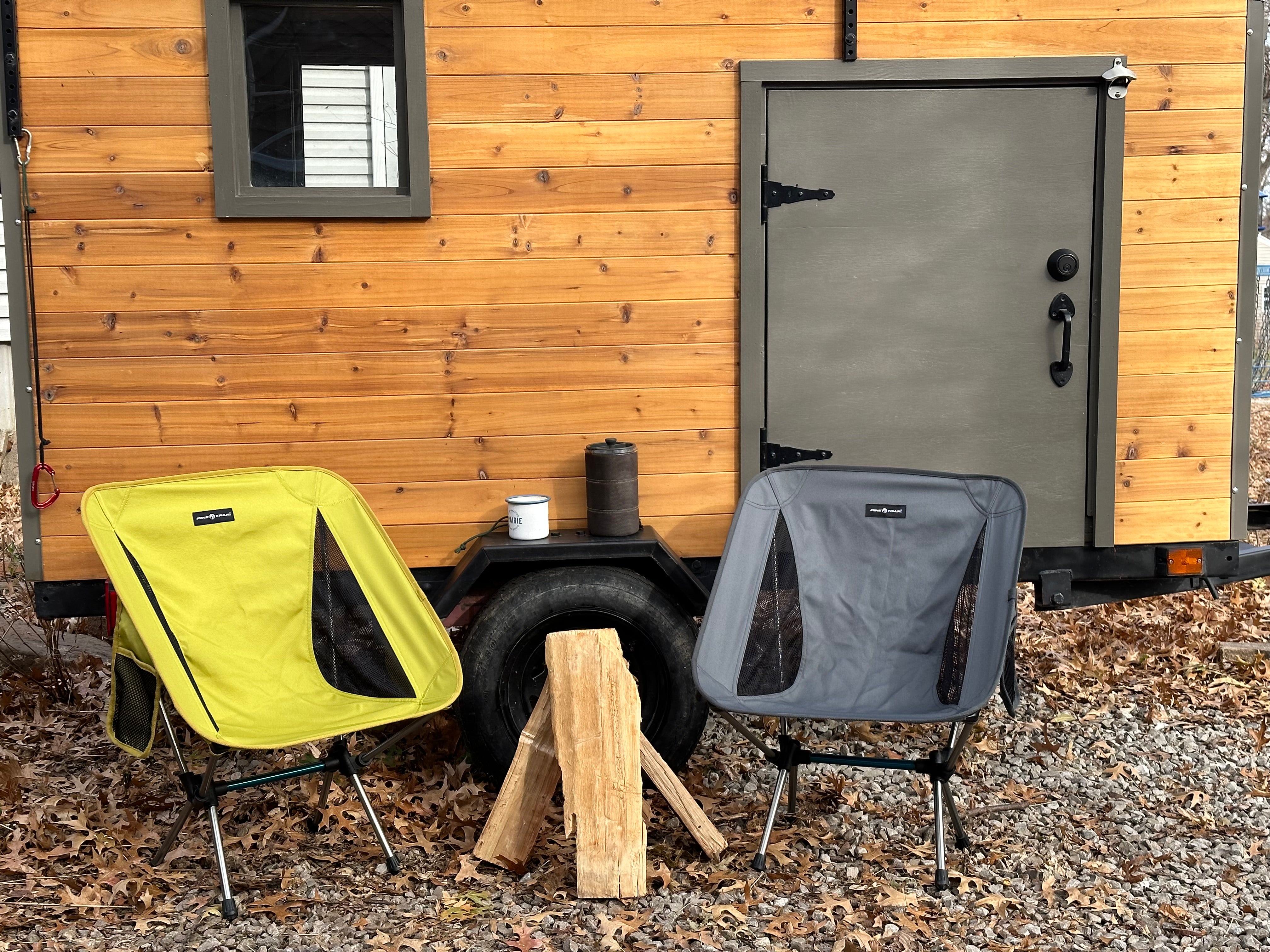
Our Ultralight Chair weighs just 2.2 lb, folds down to 13" x 5" x 6", and holds up to 330 lb, so it slides into a day pack without much fuss. Pull it out at the overlook, pour something hot from your thermos, and enjoy a sit that doesn't leave a wet spot on your pants for the hike back. It's back in stock in Battleship Grey, Admiral Blue and Chartreuse.
Your November Day Hike Checklist
- Leg gaiters for frost, dew, mud and leaf litter
- Waterproof hiking socks (test them with your boots first)
- Carbon fiber trekking poles with mud baskets
- Base, mid and shell layers, plus hat and gloves
- Headlamp, charged phone, offline map
- Water, a hot drink, and more snacks than seems reasonable
- An ultralight chair for the view stop
Late fall rewards the hikers who keep going after the crowds call it a season. Quiet trails, crisp air, wide-open views, and that satisfying feeling of finishing a hike with warm, dry feet. Pack smart, watch the clock, and go enjoy the most underrated month on the trail. We'll see you out there.
— The Pike Trail Crew
Wander More. Worry Less.